

Scorpions, Termites and Pest Inspections When You Buy a Las Vegas Home: What to Check (2026)
Buying a home in Las Vegas or Henderson? Somewhere between the offer and the keys, someone's going to ask about termites, and if you're coming from out of state, someone's going to ask about scorpions too. Here's the good news: both are a normal part of desert living, and both are very manageable when you know what to check. The Las Vegas purchase agreement gives you time to inspect, it lists a termite inspection and a pest inspection as their own line items, and Nevada requires the person writing a termite report to be licensed by the Nevada Department of Agriculture. On top of that, a VA loan in Clark County comes with a termite report requirement, and FHA appraisers look for signs of wood-destroying insects too. This guide walks through how pest and termite inspections fit into a Las Vegas purchase, what the report actually tells you, what the seller has to disclose, what your lender may require, the scorpion questions worth asking, and who handles pests when there's an HOA.
The short version
- Two separate line items. Section 8(D) of the Las Vegas REALTORS® Residential Purchase Agreement (Rev. 10/25) lists a Termite Inspection and a Pest Inspection separately, and you and the seller agree on who pays for each: seller, buyer, 50/50, waived or N/A.
- Do it inside due diligence. If an inspection isn't done and your repair requests aren't delivered within the Due Diligence Period, the contract treats that inspection as waived.
- Termite reports take a license. In Nevada, a person who inspects for wood-destroying pests, writes or alters the inspection report, gives estimates or bids, or bids pesticide treatment work needs an applicator license from the Nevada Department of Agriculture (NRS 555.285, with exceptions in the Department's regulations). The structural category for that work is C3.
- The report follows state rules. It has to say whether there's evidence of active or inactive infestation, whether there are conditions that invite termites, and which areas couldn't be inspected (NAC 555.430).
- VA loans in Clark County need one. VA lists Clark County among the Nevada counties where wood-destroying insect information is required.
- Sellers disclose termite history. Item 5 on Nevada's Seller's Real Property Disclosure Form asks about any history of infestation (termites, carpenter ants, etc.).
- Scorpions are a different question. A termite report is about wood-destroying pests. For scorpions, ask about pest service history, look at how the home is sealed, and plan simple pest-proofing.
I'm Andrew Guiant, a REALTOR® with Simply Vegas. I tour a lot of houses here, and I'd rather you know what's normal before you see your first termite report than get spooked by it.
By Andrew Guiant, REALTOR®, Nevada License S.0183462, Simply Vegas | Updated November 26, 2026
Want help deciding which inspections to order on a home you like? Send me the address. Call or text 702-496-8216.
Why Pest Inspections Matter When You Buy in Las Vegas
Most of what you'll learn about a home during escrow comes from the general home inspection. That's the big one, and if you haven't read it yet, my Las Vegas home inspection guide covers what it includes. A termite or pest inspection is a narrower, separate look by a different licensed professional. It answers a specific question: is there evidence of wood-destroying insects or the conditions that attract them?
Why bother in a desert? Because houses here still have wood in them: framing, door frames, trim, patio covers, fences and pergolas. VA treats Clark County as an area where termite information is required before it issues a value on a home, and Nevada wrote detailed rules for what a termite report has to say. That's a good sign the question is worth asking, not a reason to worry.
The other reason is timing. In the Las Vegas contract, the inspection window is your leverage window. Once your Due Diligence Period ends, your chance to cancel or negotiate over what an inspection would have found mostly ends with it. A termite report costs you a little time up front and gives you facts while you can still act on them.
What the Las Vegas Purchase Agreement Says About Termite and Pest Inspections
Most resale homes in Southern Nevada are bought on the Residential Purchase Agreement published by the Greater Las Vegas Association of REALTORS® (Las Vegas REALTORS®). The current version I checked is Rev. 10/25. Here's how pest inspections fit in.
Section 8: your Due Diligence Period
Section 8 lets you make the purchase subject to your own due diligence. You pick the number of calendar days. During that window, Section 8(A) lets you run non-invasive, non-destructive inspections of the home's systems "through licensed and bonded contractors or other qualified professionals." By the deadline, Section 8(B) lets you either cancel in writing and get your earnest money back, or resolve your objections with the seller in writing. If you do neither, Section 8(C) says you've waived the due diligence condition. My Nevada due diligence period guide explains the whole window, and my earnest money guide explains what's at stake.
Section 8(D): the inspection table
Section 8(D) is where inspections get specific. You choose your inspectors, the seller has to have the utilities on, and the contract says "it is strongly recommended that Buyer retain licensed Nevada professionals." Then there's a table of inspection types with a "Paid By" column for each one. Each line gets SELLER, BUYER, 50/50, WAIVED or N/A. Termite Inspection and Pest Inspection are two separate lines in that table, right next to the home inspection, roof, HVAC, pool/spa and others.
That matters for two reasons:
- Who pays is negotiable. Nothing in the form makes the termite inspection automatically the buyer's cost or the seller's cost. It's whatever you agree to on that line.
- Skipping has a cost. Section 8(D) says that if an inspection isn't completed and your repair requests aren't delivered within the Due Diligence Period, you're deemed to have waived that inspection and the seller's liability for repairs it would reasonably have found, except as otherwise provided by law.
Inspection fees are paid outside of escrow unless the parties give escrow different instructions before closing.
Section 8(E) and 8(F): follow-ups and repair requests
If an inspection turns up a concern, Section 8(E) lets you require additional inspections or certifications within your due diligence period. It also says, plainly, "A certification is not a warranty." Section 8(F) lets you request repairs based on the seller's disclosure or on items that materially affect the value or use of the home. Items that are general maintenance or cosmetic, and existed when your offer was accepted, are generally treated as accepted.
If a termite report comes back with findings, this is where we negotiate: treatment, repair, a credit, or in some cases walking away inside the window. Here's more on how to make an offer in Las Vegas so you know how these terms show up from day one.
Who Can Do a Termite Inspection in Nevada
In Nevada, a termite report isn't something just anyone can write. Under NRS 555.285, a person generally can't do any of these without an applicator license from the Director of the Nevada Department of Agriculture (the statute and the Department's regulations include exceptions):
- Inspect a home or other structure to identify wood-destroying pests or organisms.
- Make or change an inspection report about them.
- Give an estimate or bid, written or oral, about an infestation.
- Bid on treatment work.
The Department's license categories explain who does what. C3 (Structural) covers the control of wood-destroying pests, inspection for wood-destroying pests and inspection for conditions that invite them. C2 (Industrial and institutional) covers insect and vertebrate pests in, on or around dwelling units and other buildings, which is the general pest-control side. The Department publishes these categories on its Licensed Pest Control Companies page, so you can confirm a company's license before you book.
What I tell buyers when they pick an inspector
- Use a company licensed by the Nevada Department of Agriculture, and ask which category the person inspecting holds.
- For the termite report, ask whether it will be done on the Department's numbered form or its approved electronic form.
- Ask what's included. A termite report and a general pest inspection aren't the same service, and some buyers want both.
- Book it early in the due diligence window so there's time for a follow-up if something comes up.
I don't recommend specific pest companies in my blog. If you're working with me, I'll give you a few licensed options and you choose.
What a Nevada Termite Report Actually Tells You
Nevada's rule for wood-destroying pest reports is NAC 555.430. It's detailed, which is good for you as a buyer. The licensee has to deliver a written report to the person who requested it within 5 days of the inspection, on a numbered form from the Department or an approved electronic form with a Department-issued number. A copy goes to the Department within 15 days, and the company keeps a copy for at least 3 years.
The report has to include:
| What the report must cover | What it means for you |
|---|---|
| Evidence of active or inactive infestation of termites, other wood-destroying insects or wood-destroying fungi | "Active" means living wood-destroying pests were found. "Inactive" means evidence of them without live pests. Mold is not reported as wood-destroying fungi. |
| Whether there are conditions conducive to infestation | Things like wood touching soil, a faulty grade, poor ventilation, excess moisture or wood debris. These are often simple fixes. |
| A diagram or sketch of the foundation or structure | Shows where any problem areas or conducive conditions are. |
| Areas that were inaccessible or not inspected | For example, spots blocked by storage or covered by insulation. Pay attention here, because "not inspected" isn't the same as "clear." |
| Any treatment done, with the date, areas treated and the product's EPA registration number | Useful history if the home was treated before. |
| The company's name, license number and the licensee's signature | Lets you confirm who did the work. |
| The FHA or VA case number, if applicable | Ties the report to your loan when the lender needs it. |
How to read the result without panicking
- "No evidence" plus no conducive conditions is the cleanest result.
- Conducive conditions only usually means maintenance: pull soil or wood debris away from the house, fix a drip or a grading issue, keep wood off the ground.
- Inactive infestation means there's evidence of past activity. Ask whether the home was treated, when, and whether there's paperwork.
- Active infestation means a conversation about treatment and any repair, who pays, and whether it changes your plans. That's exactly what the due diligence window is for.
A termite report is not a structural engineering report, and it isn't a warranty. If damaged wood shows up, a qualified contractor prices the repair. If you're also thinking about coverage after closing, my home warranty vs. home inspection guide explains what each one does.
What Lenders May Require: VA, FHA and Conventional
VA loans
VA requires wood-destroying insect information in areas where its termite probability map shows a "very heavy" or "moderate to heavy" chance of infestation. On VA's local requirements page, Nevada's list of counties includes Clark County, which covers Las Vegas, Henderson and North Las Vegas. So on a VA purchase here, plan on a termite report being a condition of the VA Notice of Value.
A few details from VA's own guidance:
- Who pays. Since VA Circular 26-22-11 (June 2022), veterans may be charged the wood-destroying pest inspection fee where the Notice of Value requires it, and may pay for repairs needed to meet VA's Minimum Property Requirements. VA encourages veterans to negotiate those costs with the seller, which lines up with the "Paid By" line in Section 8(D).
- Repairs before closing. Repairs identified on the report that are needed to meet VA's Minimum Property Requirements must be completed before the loan is guaranteed.
- Condos. VA's Lenders Handbook says a termite inspection isn't required on units in high-rise condominiums where units are stacked vertically. For villa and townhome-style condos where units sit side by side, it's required in those zones unless the HOA provides evidence of treatment. If you're looking at a tower, my high-rise condo guide covers the rest of the diligence.
FHA loans
On an FHA loan, the appraiser observes the foundation and perimeter for signs of wood-destroying pests. The appraiser isn't a pest specialist, but if there's evidence or notice of an infestation, including a prior treatment, the appraisal is made subject to an inspection by a qualified pest control specialist. The lender then needs that inspection and proof of any required treatment to confirm the home is free of wood-destroying insects and organisms.
For new construction with FHA financing, HUD's handbook calls for a builder's termite protection guarantee (form HUD-NPMA-99-A) and, when the home was treated, a service record (HUD-NPMA-99-B), unless the county is on HUD's exception list. Nevada isn't on that list. If you're buying new, ask the builder for the termite treatment paperwork either way. My guide to buying new construction in Henderson and Las Vegas covers the rest of the builder side.
Conventional and cash
Conventional lenders set their own conditions, so ask your loan officer early whether a termite report will be required on your file. Paying cash? No lender is asking, which means the decision is all yours. I'd still consider one on a resale home. If you're comparing loan types, start with my first-time buyer programs guide.
What the Seller Has to Disclose
Nevada sellers of most resale homes fill out the Seller's Real Property Disclosure Form, which the Nevada Real Estate Division publishes as Form 547 (Revised 6/1/2023). Under the purchase agreement, the seller provides it within 5 calendar days after acceptance, and Nevada law requires it at least 10 days before the property is conveyed.
On pests, the form has one direct question:
5. Infestation: Any history of infestation (termites, carpenter ants, etc.)?
The seller answers Yes or No. A few things to keep in mind:
- It's about what the seller knows. The form says it isn't a warranty and isn't a substitute for inspections.
- It doesn't name scorpions. The question is framed around wood-destroying insects. If scorpions or other pests matter to you, ask the seller directly (questions below).
- The duty continues. The form says the seller has a duty to disclose new defects as they're discovered and known defects that get worse before closing.
- Your own report matters. The form also notes that a seller isn't liable for a disclosure error caused by relying on information from a licensed professional, including a pesticide applicator. That's one more reason to get your own report instead of relying on an old one.
If item 5 is marked Yes, that's not a deal breaker. Ask for the treatment records, the date, the company's report and whether any service agreement transfers to you.
Scorpions: What to Ask and What to Look For
Now the question a lot of out-of-state buyers ask. Yes, scorpions live in the Mojave Desert, and the University of Arizona Cooperative Extension guide says the Arizona bark scorpion also colonizes small parts of Nevada. University of Arizona Cooperative Extension describes it as often associated with homes and hollow-block perimeter walls, and notes that irrigated landscaping can support more of them than open desert.
The same Extension guide says pest-proofing the home is by far the most effective way to reduce scorpion contact, and that pesticides alone don't do the job. That's actually good news for a buyer, because most of what helps is simple and visible during a showing or inspection.
Questions to ask the seller (through me)
- Has the home had a regular pest service? How often, and is it still active?
- Have you seen scorpions inside the home? Where, and how often?
- Has any pest-proofing been done, like door sweeps, weather-stripping, sealing around pipes or screened weep holes?
- Has the home ever been treated for termites? Is there a report or service agreement?
Things to look at during showings and inspections
- Doors. Gaps under exterior doors and worn weather-stripping are easy entry points.
- Windows and screens. Screens that fit tight and aren't torn.
- Penetrations. Gaps around pipes, hose bibs, vents and wall openings that could use caulk.
- Weep holes. On stucco homes, the weep screed at the bottom of walls lets water out. The Extension guide suggests screening weep holes with coarse steel mesh, not plugging them.
- Block walls. Uncapped or open hollow-block walls offer hiding spots. Capped and stuccoed walls are less inviting.
- Yard. Wood, rocks, clutter or debris piled against the house, and tree branches touching the roof.
After you move in
The Extension guide's practical habits are simple: keep shoes and towels off the floor, use a UV (black) light, since scorpions glow under it, and keep up with weather-stripping and door sweeps. If you regularly find scorpions inside, it recommends calling a pest management professional experienced with scorpions. If anyone is ever stung, call Poison Help at 1-800-222-1222, and call 911 for any emergency or severe symptoms. None of this is a reason to skip a great house. It's just part of owning a home in the desert, like changing your air filters.
If you're buying a home with desert landscaping, my desert-landscaped home guide covers the yard side, and my Henderson pool home guide covers pool inspections.
HOA vs. Owner: Who Handles Pests?
If the home is in an HOA, pest control can be split between you and the association. Nevada's starting rule is NRS 116.3107: except to the extent the declaration says otherwise, the association maintains, repairs and replaces the common elements, and each owner takes care of his or her own unit. The CC&Rs can change that split, and that's where the real answer lives.
What that usually means in practice:
- Single-family homes in a master-planned HOA. Inside your house and lot is typically your responsibility. Common areas, like parks, walls and landscaping the HOA maintains, are the association's.
- Condos and townhomes. This varies a lot. Some associations include pest service in the dues, some treat only common areas, and some leave it to owners. Termite treatment of a shared building may fall to the association, depending on the CC&Rs.
Here's what I look for in the HOA resale package:
- Does the budget have a pest control line item?
- Do the CC&Rs or rules say who handles pests and termites in units vs. common elements?
- Do the board minutes mention termite treatment, tenting or building-wide pest work?
- For a VA loan on a side-by-side condo or townhome, can the HOA provide evidence of termite treatment?
My Las Vegas HOA guide explains the resale package and your review window.
New Construction vs. Resale
New construction. Ask the builder whether and how the home was treated for termites during construction. FHA new construction requires the builder's termite guarantee form unless the county is exempt, and Nevada isn't on HUD's exception list. When that HUD-NPMA-99-A form is used, it includes a builder guarantee to have a licensed company treat if subterranean termites show up within one year from the date of closing. Ask for copies of the treatment paperwork, and keep them with your closing documents. A brand-new home is also a great time to set up good habits: tight door sweeps, sealed penetrations and clear space between the house and the landscaping.
Resale. Here the history matters more: the seller's answer to item 5, any prior treatment records, and what a current licensed report finds. Wood features like patio covers, pergolas and fences are worth a look on any resale home. My resale vs. new construction guide compares the two more broadly.
Pest and Termite Checklist for Las Vegas Buyers
- Before you write the offer: decide whether you want a termite inspection, a pest inspection or both, and who you'll ask to pay on the Section 8(D) "Paid By" lines.
- Ask your lender: VA in Clark County means a termite report is required. For FHA and conventional, ask whether one will be needed.
- Read the seller's disclosure: check item 5 and ask for treatment records if it's marked Yes.
- Book licensed inspectors early: confirm Nevada Department of Agriculture licensing (C3 for termite reports).
- Read the whole report: active vs. inactive, conducive conditions and the inaccessible areas.
- Ask the scorpion questions: pest service history, sightings, pest-proofing.
- HOA homes: check the resale package for who handles pests and termites.
- Negotiate inside the window: treatment, repair or credit, in writing, before your Due Diligence Deadline.
- After closing: keep the report and any treatment paperwork, and set up simple pest-proofing.
Frequently Asked Questions
Is a termite inspection required when buying a house in Las Vegas?
Not for every purchase. The Las Vegas purchase agreement lets you choose it and decide who pays. A VA loan in Clark County requires wood-destroying insect information, and an FHA loan can require one if the appraiser sees evidence or notice of infestation. Other lenders set their own conditions.
Who pays for the termite inspection in Las Vegas?
It's negotiable. Section 8(D) of the Las Vegas REALTORS® purchase agreement has a "Paid By" line for the termite inspection: seller, buyer, 50/50, waived or N/A. On VA loans, veterans may pay the fee when the Notice of Value requires it, and VA encourages negotiating it with the seller.
Does a home inspection cover termites?
Treat them as separate. The purchase agreement lists the home inspection and the termite inspection as different line items, and in Nevada, a person who writes a wood-destroying pest report generally needs a Nevada Department of Agriculture applicator license.
Does the Nevada seller disclosure ask about termites or scorpions?
It asks about termites. Item 5 of the Seller's Real Property Disclosure Form asks about any history of infestation (termites, carpenter ants, etc.). It doesn't name scorpions, so ask the seller directly about pest service and sightings.
Are scorpions a reason not to buy a Las Vegas home?
Not on their own. They're part of living in the desert. Extension guidance says pest-proofing, like door sweeps, weather-stripping, sealed gaps and capped block walls, is the most effective way to reduce contact. Ask about pest service history, look at how the home is sealed and plan for basic upkeep.
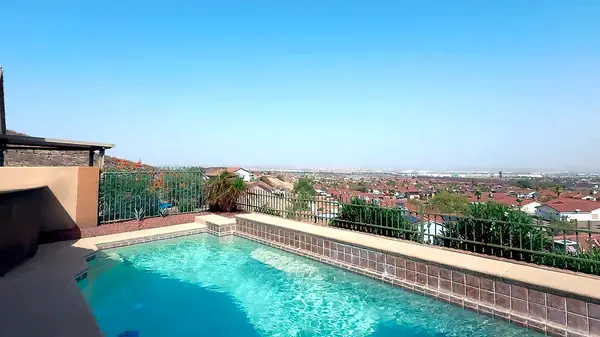
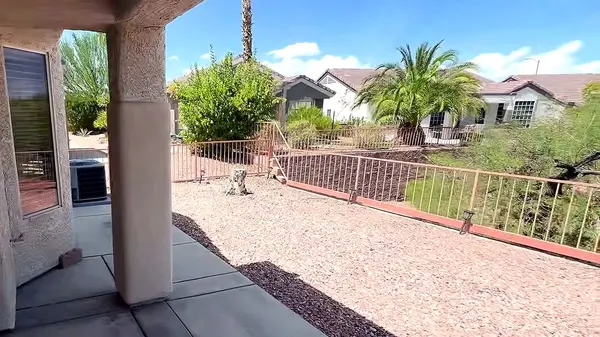
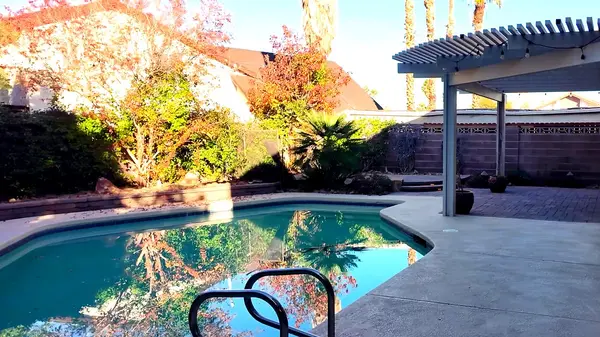
Watch: Las Vegas Homes I've Toured
Click any video to watch it on YouTube. The homes shown were for sale when I filmed them and aren't necessarily for sale now.
 ▶ My new build had 80 problems | Why inspections matter |
 ▶ Vintage modern single story | No HOA, big backyard |
 ▶ Green Valley pool home | Remodel and disclosures |
 ▶ Never lived in | Gated, upstairs loft |
More videos: see them all on my YouTube channel.
Buying Soon? Let's Get the Inspections Right
When we find your home, I'll help you pick which inspections make sense, fill in the "Paid By" lines before we write the offer, and schedule everything early in your due diligence window so you have time to act on what we learn. Moving from out of state? My out-of-state moving checklist has the rest of the to-do list, and my closing costs guide covers what you'll pay at the end.
Call or text 702-496-8216. It's my cell, I'll answer.
Andrew Guiant, REALTOR® | Simply Vegas
📞 702-496-8216
✉️ andrew@andrewsellsvegas.com
🏠 Search homes: andrewsellsvegas.com
▶️ Home tours: YouTube @andrewsellsvegas
Contract sections, disclosure form items, licensing rules and lender requirements come from the Las Vegas REALTORS® Residential Purchase Agreement (Rev. 10/25), the Nevada Real Estate Division, the Nevada Revised Statutes and Administrative Code, the Nevada Department of Agriculture, the U.S. Department of Veterans Affairs and HUD as of November 26, 2026, and can change. Your lender's requirements control your loan. This post is general information only, not legal, tax, insurance, pest-control or engineering advice, and it is not a guarantee of any inspection result or loan approval. Talk with a licensed pest control company, your lender and, for legal questions, an attorney about your situation. Information is deemed reliable but not guaranteed.
Sources
- Greater Las Vegas Association of REALTORS® (Las Vegas REALTORS®), Residential Purchase Agreement (Joint Escrow Instructions), Rev. 10/25, Sections 8(A)-(F), 12 and 27 (blank form)
- Nevada Real Estate Division, Seller's Real Property Disclosure Form (Form 547), Revised 6/1/2023: https://red.nv.gov/uploadedFiles/rednvgov/Content/Forms/547.pdf
- Nevada Revised Statutes Chapter 113 (NRS 113.130 and 113.150): https://www.leg.state.nv.us/nrs/nrs-113.html
- Nevada Revised Statutes Chapter 555 (NRS 555.285): https://www.leg.state.nv.us/nrs/nrs-555.html
- Nevada Administrative Code Chapter 555 (NAC 555.430): https://www.leg.state.nv.us/nac/nac-555.html
- Nevada Department of Agriculture, Licensed Pest Control Companies (license fields and categories): https://agri.nv.gov/Plant/PEST/Licensed_Pest_Control_Companies/
- Nevada Department of Agriculture, Wood Destroying Pest Inspection online reporting: https://wdpir.nv.gov/about
- Nevada Revised Statutes Chapter 116 (NRS 116.3107): https://www.leg.state.nv.us/nrs/nrs-116.html
- U.S. Department of Veterans Affairs, Local Requirements (wood-destroying insect information by state and county): https://www.benefits.va.gov/HOMELOANS/appraiser_cv_local_req.asp
- U.S. Department of Veterans Affairs, Circular 26-22-11, Pest Inspection Fees and Repair Costs (June 15, 2022): https://www.benefits.va.gov/HOMELOANS/documents/circulars/26-22-11.pdf
- VA Lenders Handbook (VA Pamphlet 26-7), Chapter 12, Topic 33, Wood Destroying Insects/Fungus/Dry Rot
- HUD, FHA Single Family Housing Policy Handbook 4000.1 (wood destroying insects, appraiser observation, new construction documentation): https://www.hud.gov/hud-partners/single-family-handbook-4000-1
- HUD, FHA Termite Treatment Exception Areas (last revised 11/03/2021): https://www.hud.gov/sites/dfiles/SFH/documents/SFH_POLI_TERMITE.pdf
- University of Arizona Cooperative Extension, Scorpions of the Desert Southwest United States (AZ1768): https://extension.arizona.edu/sites/extension.arizona.edu/files/pubs/az1768-2018.pdf
- Featured photo: Andrew Guiant, still from his own home tour video (https://www.youtube.com/watch?v=YyUsE5OuL08). Cropped, brightened and color-enhanced.
- All checked November 26, 2026.
Andrew Guiant, REALTOR® | Simply Vegas | NV Lic. S.0183462 | 702-496-8216 | andrewsellsvegas.com
Categories
- All Blogs (93)
- Aries (1)
- Buyer Tips (81)
- Communities (1)
- Community Guides (11)
- Golf Communities (4)
- Henderson (22)
- Henderson Events (1)
- High-Rise Condos (8)
- Las Vegas Communities (26)
- Las Vegas Events (1)
- Living in Las Vegas (17)
- Model Home Tours (3)
- Moving to Las Vegas (3)
- New Construction (8)
- Relocation (6)
- Seller Tips (16)
- Southwest Las Vegas (1)
- Things to Do (2)
Recent Posts





GET MORE INFORMATION