

Property Taxes in Las Vegas: How Nevada’s System Works (2026)
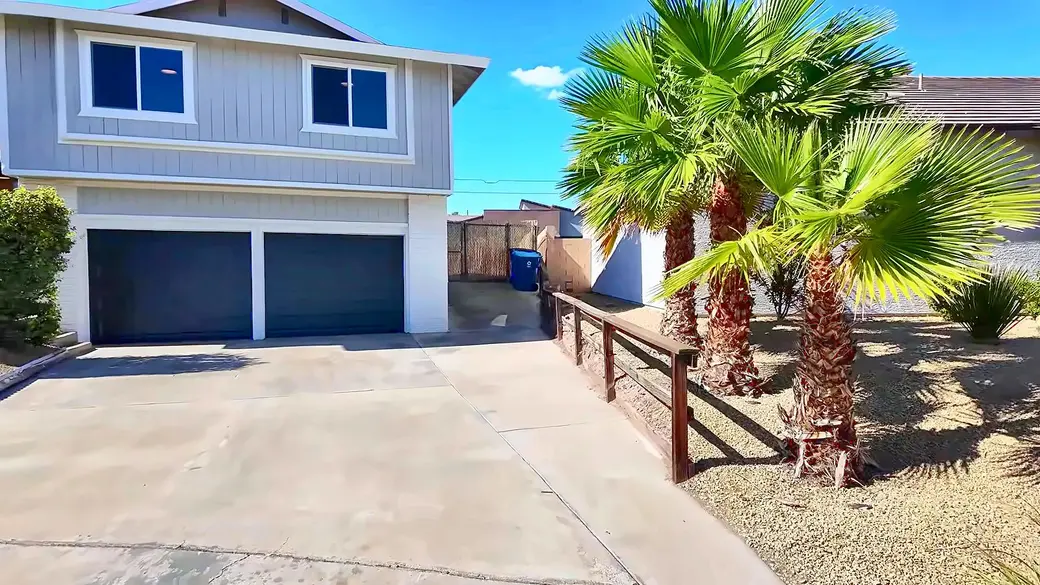
Property tax is part of every Las Vegas mortgage payment estimate—and the way Nevada calculates it is different from California. Your bill starts with how the Clark County Assessor values the property and the combined tax rate for your area. Then Nevada’s partial abatement rules can limit how much an owner-occupied primary residence’s tax bill rises from one year to the next—generally described as a 3% cap on that bill for qualifying homes (Clark County Assessor – Tax Abatement; NRS 361.4723).
Why property taxes matter when you buy
- Lenders count taxes in your debt-to-income and escrow payment.
- Two similar sale prices can carry different tax bills depending on improvements, abatement status, and local rates.
- Buying can change abatement eligibility. Ownership documents and primary-residence status matter.
- New construction may not receive the residential abatement in its first fiscal year on the roll.
I'm Andrew Guiant, a REALTOR® with Simply Vegas. On every serious home, we look up the Assessor record and talk through what your escrow payment might look like after closing.
By Andrew Guiant, REALTOR®, Nevada License S.0183462, Simply Vegas · Updated November 5, 2026
Have a Las Vegas tax question on a specific address? Call or text 702-496-8216 or email andrew@andrewsellsvegas.com.
How Nevada Property Tax Is Built
Nevada’s system uses taxable value concepts set in state law, an assessed value derived from that taxable value, and local tax rates levied by counties, cities, schools, and other districts. The County Assessor values property; the Treasurer bills and collects. For a plain-English walkthrough of abatement math and exceptions, the Nevada Department of Taxation’s property-tax materials and Clark County Assessor pages are the places to start—not a national tax calculator.
Your monthly mortgage escrow usually collects 1/12 of the estimated annual tax so the servicer can pay the bill when due. That estimate should be updated after the first full tax year you own the home.
The Owner-Occupied Residential Abatement (the “3% Cap”)
Nevada law provides a partial abatement for an owner-occupied single-family residence that is the owner’s primary residence (including many townhouses, condominiums, and manufactured homes used that way). Clark County explains that NRS 361.4723 applies a 3% cap on the tax bill of the owner’s primary residence, and that only one property in Nevada may be selected as a primary residence for this purpose (Clark County Assessor).
The Nevada Department of Taxation’s fiscal 2026–27 tax-cap factors show a 3.0% residential tax cap for Clark County (and statewide residential factor of 3.0% in that table), with a separate general (non-residential) cap that can be higher (2026–27 Tax Cap Factors PDF). If a future year’s general cap falls below 3%, the residential cap must match that lower general cap—so always check the current Department of Taxation table.
- Primary residence only for the 3% residential treatment—and only one in the state.
- Non-owner-occupied residential and other property types follow the higher general abatement rules (up to the published general cap, historically described up to 8% depending on the year and county formula).
- New construction or a change of use may not qualify for a cap in the first fiscal year, then may receive the applicable cap afterward (Clark County Assessor).
What Happens When You Buy
Recording a new ownership document can affect owner-occupied abatement status. Clark County notes that an ownership document recorded on the Assessor’s records can remove the owner-occupied 3% abatement until a new postcard/affidavit process restores it for a following year. If you receive an Assessor postcard after closing, sign and return it promptly if you qualify (Clark County Assessor).
Do not assume the seller’s last tax bill equals your next one. Improvements, abatement status, and rate changes all move the number. During due diligence, we verify the parcel on the Assessor site and talk with your lender about the escrow cushion.
How to Check a Specific Las Vegas Home
- Find the parcel / APN on the listing or a prior tax bill.
- Look up the property on the Clark County Assessor website for assessed history and characteristics.
- Review recent tax amounts via Assessor/Treasurer tools or the seller’s bills in disclosures.
- Ask your lender for a projected monthly tax escrow after they run numbers on that address.
- If the home is new construction, ask specifically about first-year abatement treatment.
FAQ
Are Las Vegas property taxes “low”?
Many relocating buyers find Nevada’s overall tax picture different from California’s—but “low” depends on the home, the rate area, and whether abatement applies. Compare actual parcel bills, not state slogans.
Does a refinance wipe out my abatement?
Clark County says a refinance that does not include an ownership document generally does not impact the abatement; an ownership document that changes the Assessor’s document number can require a new postcard (Assessor).
Where do HOA dues fit?
HOA assessments are separate from property tax. Budget both. See my HOA guide for Las Vegas.
Bottom Line
Know the parcel’s tax history, understand the primary-residence abatement, and let your lender escrow a realistic number. Call or text 702-496-8216 and I’ll help you read the Assessor record on any home you’re considering.
Digging Deeper: Abatement Pitfalls Buyers Miss
Primary residence paperwork
If you buy and move in as your primary home, watch for Assessor postcards or instructions after recording. Failing to reclaim owner-occupied status when required can leave you on a less favorable abatement path until corrected.
Investment purchases
Non-owner-occupied property follows the general abatement rules, which can allow larger year-over-year bill increases than the primary-residence path (subject to each year’s published factors). Underwrite the payment accordingly.
New builds
Builders’ marketing payments are not the same as your second-year tax bill. Ask how first-year abatement treatment works for that parcel and have your lender escrow with a cushion.
Comparing to California
Relocating clients often expect Prop 13 mechanics. Nevada’s abatement caps tax bill growth in a different way than California’s acquisition-value system. Read the San Diego sister guide if you’re deciding between markets.
Action checklist before removing loan contingency
Confirm APN, review Assessor history, give the tax figure to your lender, and ask whether insurance + tax escrow matches your comfort payment. Call 702-496-8216 with an address and I’ll help you pull the public record.
Looking for California real estate? Andrew is also licensed in California (DRE #02448049) with Rise Realty and helps buyers and sellers in San Diego County. Read the San Diego version of this guide: Property Taxes in San Diego County: Prop 13, Supplementals & Mello-Roos (2026). Call or text 702-496-8216 or email andrew@andrewsellsvegas.com.
Andrew Guiant, REALTOR®, Simply Vegas, NV license S.0183462.
General information only, not legal, tax, or lending advice. Confirm current figures, program eligibility, and contract terms with your lender, escrow/title company, tax authorities, and advisors.
Categories
- All Blogs (61)
- Aries (1)
- Buyer Tips (49)
- Communities (1)
- Community Guides (11)
- Golf Communities (4)
- Henderson (11)
- Henderson Events (1)
- High-Rise Condos (7)
- Las Vegas Communities (23)
- Las Vegas Events (1)
- Living in Las Vegas (6)
- Model Home Tours (3)
- Moving to Las Vegas (2)
- New Construction (7)
- Relocation (5)
- Seller Tips (13)
- Southwest Las Vegas (1)
- Things to Do (2)
Recent Posts





GET MORE INFORMATION