

Las Vegas Home Insurance Before You Close: Roof Age, Claims History and When to Get Quotes (2026)
When I get a home under contract in Las Vegas or Henderson, the inspection gets all the attention, but there's another call I want my buyers making in the first few days: the one to an insurance agent. Your lender will generally want proof of homeowners insurance before closing, and the price and terms of that policy depend on the house itself. The age and condition of the roof, the home's claims history, the cost to rebuild it, and even your own credit and claims history all play a part. If you wait until the last week of escrow to shop, you can find out too late that the roof needs work before a company will write a policy, or that the premium blows up your monthly budget. This guide walks through what drives a homeowners insurance quote here, why roof age matters so much, how to see a home's past claims with a C.L.U.E. report, when to get quotes during your Nevada due diligence period, and what your lender will require.
The short version
- Get insurance quotes during your due diligence period, not after. That's the window when you can still cancel and get your earnest money back.
- Insurers price the house, not just you. Rebuild cost, age and condition, construction, fire protection and claims history all matter, along with your own credit and claims history.
- Roof age is a big one. An older roof can mean an inspection, limited coverage or a roof paid at actual cash value instead of replacement cost.
- Ask the seller for a C.L.U.E. report. It shows up to seven years of insurance claims on the home, and only the owner can order it.
- Know your lender's rules. Under Fannie Mae's guidelines the policy needs certain perils, replacement cost coverage (roofs excepted) and a deductible no higher than 5% of the coverage amount.
- Flood and earthquake aren't in a standard policy. They take a separate policy or an endorsement.
- Bind the policy before closing and get the proof to your lender and escrow early.
I'm Andrew Guiant, a REALTOR® with Simply Vegas. I'm not an insurance agent and I won't tell you which company to use, but I make sure my buyers have a real quote in hand before their due diligence deadline, not a guess.
By Andrew Guiant, REALTOR®, Nevada License S.0183462, Simply Vegas | Updated November 18, 2026
Buying in Las Vegas and want help lining up your due diligence? Call or text 702-496-8216.
Why Insurance Belongs in Your Due Diligence Period
Nevada law doesn't require you to carry homeowners insurance, but the Nevada Division of Insurance points out that mortgage lenders can require it as a condition of the loan, and the CFPB says lenders generally require proof of it. So if you're financing, insurance is part of getting to the closing table.
The timing matters because of how the Las Vegas purchase agreement works. During your due diligence period you can look into almost anything that matters to you, including whether the home is insurable. If the results aren't acceptable, you can cancel in writing before the deadline and get your earnest money back. Once that deadline passes, an insurance surprise is a lot harder to walk away from.
There's also the budget side. The CFPB notes that your Loan Estimate lists an estimate for homeowners insurance in the "Projected Payments" section on page one, and that it's a good idea to do your own research on the cost. A real quote on the actual house is a lot better than a placeholder. Many buyers pay the premium through an escrow account as part of the monthly mortgage payment, and the first year's premium often shows up in your closing costs.
What Drives a Las Vegas Homeowners Insurance Quote
The Nevada Division of Insurance's 2026 Consumer's Guide to Home Insurance lists the things likely to affect your premium. Different companies also charge different premiums for similar coverage, so the company you pick matters too.
| Category | What insurers look at (per the Nevada Division of Insurance) |
|---|---|
| The home | The cost to rebuild (not the purchase price, which includes land), brick or masonry versus wood frame, distance to a water source or fire department and the quality of local fire protection, the age and condition of the home, and the claims history of the home and of homes in the area |
| Your choices | The coverage and optional endorsements you pick, your deductible, bundling home and auto, and how long you've been with your current company |
| You | Your credit history (Nevada insurers may use it to decide whether to sell you a policy and what to charge) and your own history of water, fire, theft or liability claims on homes you've owned |
| Other features | Protective devices like smoke detectors, alarms, sprinklers and deadbolts (many insurers give a discount), a wood stove, a swimming pool, trampoline or play structure, the types of pets you have, and running a business from home |
A couple of these come up a lot here:
- Pools. Plenty of Las Vegas homes have one. Tell your agent up front so the quote reflects it.
- Dogs. Under NRS 687B.383, an insurer can't refuse, cancel, refuse to renew or raise the premium on a homeowners policy based on a dog's breed. It can ask whether a dog is known to be dangerous or vicious, or has been declared dangerous or vicious.
- Rebuild cost, not sale price. Your dwelling coverage should be based on what it would cost to rebuild the house. The Division recommends coverage equal to the full replacement cost and notes that many insurers require at least 80% of replacement cost, or a co-insurance penalty may apply on partial losses.
Roof Age and Condition
If there's one part of the house that can change your insurance options, it's the roof.
- Older roofs get extra scrutiny. The Insurance Information Institute says that if a roof is over 20 years old when you apply, most insurance companies will require it to pass an inspection, some may decline to write a new policy, and others may cover it only at actual cash value.
- Actual cash value versus replacement cost. Replacement cost pays to repair or replace with similar materials without taking off for depreciation. Actual cash value takes depreciation off. The Division's own example: if a roof had a 30-year warranty and it's 28 years old, there will be depreciation for the age and condition of the roof.
- Lenders allow roofs at actual cash value. Fannie Mae's guidelines say the policy must cover the home on a replacement cost basis, with the exception of roofs. The roof must be insured, but not necessarily at replacement cost. So a policy can satisfy your lender and still leave you paying a big share of a roof claim.
Here's how I handle the roof on a purchase:
- Read the seller's disclosure. The Nevada Seller's Real Property Disclosure Form asks whether there's any problem with the roof and about previous or current moisture conditions or water damage.
- Ask for the roof's age in writing. Permits, invoices or warranty paperwork beat a guess. Insurance agents will ask.
- Have the roof looked at during inspections. Your general inspector looks at the roof as accessible, and if anything looks off, a roofer can take a closer look. My home inspections guide covers what's typical here.
- Give your insurance agent the real roof details (age, material, condition) and ask directly: "Will you cover this roof at replacement cost or actual cash value, and will you need an inspection?"
Claims History: The C.L.U.E. Report
Insurers look at a home's past claims, and much of that comes from the C.L.U.E. (Comprehensive Loss Underwriting Exchange) database run by LexisNexis.
- What it shows. According to the CFPB, C.L.U.E. collects and reports up to seven years of home insurance and personal property claims to help insurers with pricing and underwriting. The report typically lists the date of loss, the type of loss and the amount paid.
- Who can get it. The homeowner can request a copy from LexisNexis, free once every 12 months. A buyer or a buyer's agent can't pull it for a home they don't own, so ask the seller for a copy.
- Your own history counts too. The Division lists your own claims history on homes you've owned as a premium factor. If you own a home now, you can request your own report from LexisNexis and check it for mistakes.
How I use it: I ask for the seller's C.L.U.E. report early in due diligence. A past claim isn't automatically bad news. A wind claim that ended in a new roof can be a good thing. A water claim means I want to know where the water came from, what was repaired, who did the work and whether it was permitted, and I want my buyer's inspector looking at that area. The seller doesn't have to provide the report, but asking costs nothing.
When to Get Quotes: A Due Diligence Timeline
Every contract has its own dates, so match this to yours.
| When | What to do |
|---|---|
| Before you write an offer | If a home has an older roof, a pool or a past water issue, call an insurance agent for a rough idea. It's just a heads-up, not a quote you can count on. |
| First few days after acceptance | Ask for the seller's C.L.U.E. report and roof age paperwork. Request quotes with the full address and details, and send your loan officer the agent's contact info. |
| After inspections | Share the roof and any major findings with your insurance agent. Ask whether anything has to be fixed before they'll write the policy. |
| Before your due diligence deadline | Have a written quote with the coverage, deductible and roof settlement terms you're comfortable with. If you can't get acceptable coverage, talk with me about repair requests or canceling while your earnest money is still protected. |
| Before closing | Bind the policy, make sure the effective date is your closing date, and get the binder or evidence of insurance to your lender and escrow with time to spare. |
A few Nevada rules worth knowing:
- Binders. Under NRS 687B.186, a binder issued under Nevada's binder rules counts as a policy for proving you have insurance. A binder can't be effective for more than 90 days unless the Commissioner approves an extension (NRS 687B.182). Your lender can still turn down the insurer over the adequacy and terms of the coverage, the insurer's financial standards or its ability to service the policy (NRS 687B.187).
- The first 70 days. Nevada limits when an insurer can cancel a policy midterm, but those limits apply once a policy has been in effect for at least 70 days or has been renewed (NRS 687B.320). The Division's guide says that as a new policyholder, your company can cancel for any reason within the first 70 days. That's one more reason to give your agent accurate roof and claims information up front.
- Nonrenewal notice. For homeowners policies, an insurer that won't renew generally has to send notice at least 30 days before the policy expires (NRS 687B.340).
What Your Lender Will Require
Your loan officer has the final word on your loan, but Fannie Mae's Selling Guide is a good look at what a typical conventional lender checks:
- You pick the insurer. Fannie Mae says the borrower has the right to choose the insurer, as long as the coverage meets its requirements.
- Covered perils. The policy should be written on a "Special" coverage form or equivalent, and at a minimum cover fire or lightning, explosion, windstorm, hail, smoke, aircraft, vehicles, and riot or civil commotion.
- Replacement cost, with the exception of roofs (see above).
- Maximum deductible of 5% of the coverage amount, including any separate deductible for a specific peril like wind.
- Insurer rating. The insurer must meet a minimum financial rating from one of the listed agencies (for example, "B" or better from AM Best).
- Names on the policy. Everyone on title must be a named insured, the policy needs a mortgagee clause, and it has to provide written notice before the insurer can cancel.
FHA, VA and other loan programs have their own rules, so ask your loan officer what they'll need and how early they want it.
Don't let it lapse after closing. If you let your insurance lapse, the Division and the CFPB both warn that your lender can buy coverage on the home and charge you for it. That coverage may only protect the lender and is likely to cost more than a policy you'd buy yourself.
Condos and townhomes
If you're buying a condo, the HOA's master policy covers part of the property, and you'd usually carry a unit-owners policy (HO-6) for the rest. Fannie Mae requires a unit-owners policy when any part of the unit's interior or improvements isn't covered by the master policy, or when the master policy has a per-unit deductible. The Division notes that a townhouse may be insured with either an individual homeowners policy or an association master policy, so read the HOA documents to see which applies. My HOA guide explains how to read them.
Flood and Earthquake Are Separate
The Division lists flood and earthquake as standard exclusions that take a special policy or endorsement. If you want earthquake coverage, ask your agent about it when you quote. For flood, if any part of the home is in a FEMA Special Flood Hazard Area (zones starting with "A" or "V"), your lender will generally require flood insurance. I cover the free map tools, the 30-day waiting period and the exception for new loans in my guide to Las Vegas flood zones.
Solar Panels on the Roof?
Solar adds its own insurance and paperwork questions, especially if the panels are leased or financed. I won't repeat it here. Read my guide to buying a Las Vegas home with solar panels, and tell your insurance agent how the panels are owned when you ask for a quote.
How to Shop for a Policy
- Use the Division's tools. The Nevada Division of Insurance has a lookup tool listing admitted insurance companies currently accepting applications for home insurance, searchable by ZIP code. Its 2026 guide links to it.
- Only buy from licensed companies and agents. The Division says it's illegal for unlicensed insurers to sell insurance in Nevada, and if you buy from one there's no guarantee your coverage will be honored.
- Know who you're talking to. Independent agents represent several companies and can give you several quotes. Exclusive agents sell one company's products. Direct companies sell online, by mail or by phone.
- Compare apples to apples. Same dwelling amount, same deductible, same roof settlement terms, same liability limit. A cheaper quote with a 5% deductible and an actual-cash-value roof isn't the same product as one without.
- Make a home inventory once you move in. The Division recommends it to help you pick the right coverage and speed up a claim.
- Questions or a problem with an insurer? Start with the company. If that doesn't fix it, the Division's Consumer Services team can help. The Las Vegas office is at 3300 W. Sahara Ave., Suite 275, (702) 486-4009.
Your Insurance Checklist Before You Close
- Call an insurance agent early, especially for an older roof, a pool or a past water issue.
- Read the seller's disclosure for roof problems and water damage.
- Ask the seller for a C.L.U.E. report and the roof's age in writing.
- Get the roof inspected and share the findings with your agent.
- Ask how the roof will be covered: replacement cost or actual cash value.
- Set dwelling coverage on rebuild cost, not the purchase price.
- Check the deductible against your lender's limit and your savings.
- Confirm your lender's requirements for perils, deductible, insurer rating and names on the policy.
- Condo or townhome? Read the HOA master policy and get an HO-6 quote if needed.
- Check the flood zone and decide on earthquake coverage.
- Decide before your due diligence deadline with a written quote in hand.
- Bind the policy effective on your closing date and send proof to your lender and escrow.
Making It Part of Your Offer
When a home has an older roof or a past claim, I build that into the offer and the due diligence plan from the start. Depending on what we find, we can ask the seller for roof repairs or a replacement, a credit, or a price adjustment, or we can cancel within the due diligence period. Every deal is different, and the seller doesn't have to agree, but asking with an inspection report and a quote in hand is a lot stronger than asking with a hunch. Here's how to make an offer in Las Vegas.
What I'm Not Going to Tell You
I'm not going to tell you what your premium will be or which company to use. Prices depend on the house, the coverage you pick and your own history, and they change. What I will do is get the roof details, disclosures and claims history in front of you early, make sure your insurance agent and loan officer have what they need, and keep an eye on your due diligence deadline so you're not deciding at the last minute.
FAQ: Las Vegas Home Insurance Before You Close
Is homeowners insurance required in Nevada?
Not by Nevada law. But if you have a mortgage, your lender can require it as a condition of the loan, and lenders generally require proof of coverage before closing.
When should I get homeowners insurance quotes when buying a house?
During your due diligence period, ideally in the first few days after your offer is accepted. That leaves time to share inspection findings with your agent and decide before the deadline, while you can still cancel and get your earnest money back.
Can I see a home's insurance claims history before I buy?
You can ask. The C.L.U.E. report shows up to seven years of home insurance claims, but only the owner can order it, so ask the seller for a copy. The seller doesn't have to provide it.
Will an old roof affect my homeowners insurance?
It can. The Insurance Information Institute says that for roofs over 20 years old, most insurers will require an inspection, some may decline to write a policy and others may cover the roof only at actual cash value.
What deductible will my lender allow?
Under Fannie Mae's guidelines for a single-family home, the maximum deductible is 5% of the coverage amount, including any separate wind or other peril deductible. Other loan programs have their own rules, so ask your loan officer.
Does homeowners insurance cover floods or earthquakes?
Standard homeowners policies exclude flood and earthquake. Those take a separate policy or an endorsement. If the home is in a FEMA high-risk flood zone, your lender will generally require flood insurance.
Watch: Las Vegas Buyer Tips and Home Tours
Click any video to watch it on YouTube.
 â–¶ My new build had 80 problems | Why inspections matter |
 â–¶ Single-story Henderson resale | Better than new construction |
 â–¶ Upgraded Las Vegas home tour | New kitchen, baths and windows |
 â–¶ The hidden gold in this market | What buyers can negotiate now |
More videos: see them all on my YouTube channel.
Let's Get Your Insurance Lined Up Early
Send me the address you're looking at. I'll help you pull together the roof details, seller's disclosure and claims history your insurance agent will ask for, and build it into your offer and due diligence timeline. Moving here from out of state? My Las Vegas relocation guide covers the rest of the move.
Call or text 702-496-8216. It's my cell, I'll answer.
Andrew Guiant, REALTOR® | Simply Vegas
📞 702-496-8216
âœ‰ï¸ andrewguiant@gmail.com
ðŸ Search homes: andrewsellsvegas.com
â–¶ï¸ Home tours: YouTube @andrewsellsvegas
Insurance pricing, underwriting rules and lender requirements change, and every property, policy and loan is different. Confirm coverage and terms with a licensed insurance agent or company, your lender and, if needed, an attorney. I don't recommend specific insurers. This post is general information, not legal, insurance, lending or financial advice. Information is deemed reliable but not guaranteed.
Sources
- Nevada Division of Insurance, 2026 Consumer's Guide to Home Insurance (premium factors, ACV roof example, 80% replacement cost, 70-day cancellation, lapse and lender-placed coverage, policy forms incl. HO-6, ZIP code insurer lookup, Consumer Services): https://doi.nv.gov/uploadedFiles/doinvgov/_public-documents/News-Notes/CG%20to%20Home%20Insurance%202026.pdf
- Nevada Division of Insurance, Homeowners' Insurance: https://doi.nv.gov/Consumers/Homeowners-Insurance/
- Nevada Division of Insurance, Home Inventory: https://doi.nv.gov/Consumers/Homeowners-Insurance/Home-Inventory/
- Nevada Revised Statutes, Chapter 687B (NRS 687B.182, 687B.186, 687B.187 binders; 687B.310, 687B.320, 687B.340 cancellation and nonrenewal; 687B.383 dog breeds): https://www.leg.state.nv.us/nrs/NRS-687B.html
- Nevada Real Estate Division, Seller's Real Property Disclosure Form 547 (revised 6/1/2023), item 1(a) moisture and water damage, item 3 roof: https://red.nv.gov/uploadedFiles/rednvgov/Content/Forms/547.pdf
- Nevada Revised Statutes, Chapter 113 (NRS 113.130, seller disclosure): https://www.leg.state.nv.us/nrs/NRS-113.html
- Fannie Mae Selling Guide, B7-3-01, General Property Insurance Requirements for All Property Types (12/14/2022): https://selling-guide.fanniemae.com/sel/b7-3-01/general-property-insurance-requirements-all-property-types
- Fannie Mae Selling Guide, B7-3-02, Property Insurance Requirements for One- to Four-Unit Properties (08/05/2026): https://selling-guide.fanniemae.com/sel/b7-3-02/property-insurance-requirements-one-four-unit-properties
- Fannie Mae Selling Guide, B7-3-04, Property Insurance Requirements for Individual Units in a Project Development (08/05/2026): https://selling-guide.fanniemae.com/sel/b7-3-04/individual-property-insurance-requirements-unit-project-development
- Fannie Mae Selling Guide, B7-3-06, Flood Insurance Requirements for All Property Types (02/07/2024): https://selling-guide.fanniemae.com/sel/b7-3-06/flood-insurance-requirements-all-property-types
- Fannie Mae Selling Guide, B7-3-07, Evidence of Property Insurance (08/05/2026): https://selling-guide.fanniemae.com/sel/b7-3-07/evidence-property-insurance
- Fannie Mae Selling Guide, B7-3-08, Mortgagee Clause, Named Insured, and Notice of Cancellation Requirements (12/14/2022): https://selling-guide.fanniemae.com/sel/b7-3-08/mortgagee-clause-named-insured-and-notice-cancellation-requirements
- Consumer Financial Protection Bureau, LexisNexis C.L.U.E. (seven years of home claims, free report every 12 months): https://www.consumerfinance.gov/consumer-tools/credit-reports-and-scores/consumer-reporting-companies/companies-list/comprehensive-loss-underwriting-exchange/
- LexisNexis Risk Solutions, Consumer Disclosure Report requests: https://consumer.risk.lexisnexis.com/consumer
- National Association of REALTORS®, CLUE Reports Explained (only the homeowner can order; buyers can ask the seller): https://www.nar.realtor/homeowners-insurance/clue-report
- Consumer Financial Protection Bureau, What is homeowner's insurance? Why is homeowner's insurance required?: https://www.consumerfinance.gov/ask-cfpb/what-is-homeowners-insurance-why-is-homeowners-insurance-required-en-162/
- Consumer Financial Protection Bureau, What is an escrow or impound account?: https://www.consumerfinance.gov/ask-cfpb/what-is-an-escrow-or-impound-account-en-140/
- Insurance Information Institute, How Your Roof Influences Your Home and Business Insurance: https://www-legacy.iii.org/sites/default/files/docs/pdf/triple-i_roof_toolkit.pdf
- Insurance Information Institute, Homeowners Insurance Handbook (2023): https://www.iii.org/sites/default/files/docs/pdf/2023_triple-i_homeowners_insurance_handbook.pdf
- FEMA NFIP, Questions & Answers: Flood Insurance for Real Estate Professionals (F-435, August 2025): https://agents.floodsmart.gov/sites/default/files/media/document/2025-09/questions-answers-real-estate-professionals-brochure-08-2025.pdf
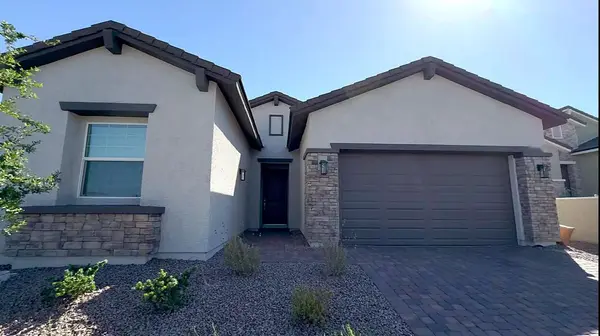
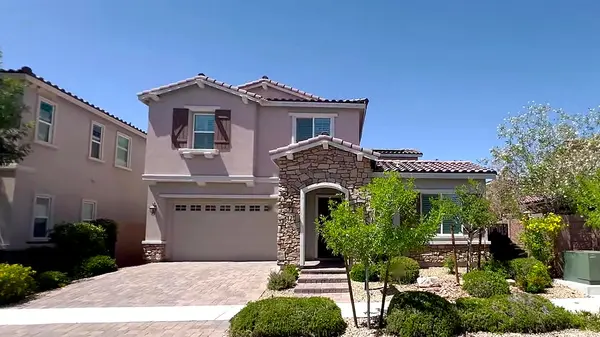
- Featured photo: Andrew Guiant, still from my own home tour video (single-story Henderson home): https://www.youtube.com/watch?v=1zSUW0uT2-8
- All checked November 18, 2026.
Andrew Guiant, REALTOR® | Simply Vegas | NV Lic. S.0183462 | 702-496-8216 | andrewsellsvegas.com
Categories
- All Blogs (84)
- Aries (1)
- Buyer Tips (72)
- Communities (1)
- Community Guides (11)
- Golf Communities (4)
- Henderson (19)
- Henderson Events (1)
- High-Rise Condos (8)
- Las Vegas Communities (25)
- Las Vegas Events (1)
- Living in Las Vegas (13)
- Model Home Tours (3)
- Moving to Las Vegas (3)
- New Construction (8)
- Relocation (6)
- Seller Tips (16)
- Southwest Las Vegas (1)
- Things to Do (2)
Recent Posts



GET MORE INFORMATION