

Buying a Las Vegas Home With Solar Panels: Owned, Leased or Financed? What to Check (2026)
A lot of the homes I tour in Las Vegas and Henderson have solar panels on the roof, and the first question I ask isn't "how big is the system?" It's "who owns it?" Panels can be a real plus in a place where the summer A/C runs for months. But the paperwork behind them changes what you're actually buying. Owned panels come with the house. Leased panels or a power purchase agreement (PPA) mean a solar company owns the equipment and you'd be taking over a contract. Financed panels can mean a lender has a filing on record that has to be paid off or handled before closing. Each one affects your loan approval, your appraisal, your title, your NV Energy bill and your roof. This guide walks through how to tell which kind of solar a home has, what Nevada law requires in solar contracts, how a lease or PPA transfers to a buyer, how UCC filings show up on title, what Fannie Mae and FHA say about leased panels, how net metering works for a new owner, and what to check during your due diligence period.
The short version
- Find out who owns the panels first. Owned, leased, PPA or financed. The Nevada seller disclosure asks, but get the actual contract.
- Leases and PPAs usually transfer only if the solar company approves you. Start that application the week you go under contract.
- Financed panels can show up on title as a UCC fixture filing. It has to be paid off, released or otherwise cleared to your lender's and title company's satisfaction.
- Leased and PPA panels add no value to the appraisal under Fannie Mae and FHA rules, and a lease payment can count in your debt-to-income ratio.
- NV Energy net metering terms stay with the address for 20 years, but the seller's banked credits don't come with the house.
- Check the roof and the warranties. Nevada solar contracts must carry a roof penetration warranty of at least 10 years from installation.
- Do all of this inside your due diligence period, while you can still cancel and get your earnest money back.
I'm Andrew Guiant, a REALTOR® with Simply Vegas. I'm not a solar installer, a lender or an attorney, but I make sure my buyers know exactly what's on the roof, and what's attached to it on paper, before their due diligence clock runs out.
By Andrew Guiant, REALTOR®, Nevada License S.0183462, Simply Vegas | Updated November 17, 2026
Looking at a home with solar and want help sorting out the paperwork? Call or text 702-496-8216.
Owned, Leased, PPA or Financed: What's the Difference?
Fannie Mae's Selling Guide lists the common ways solar panels end up on a home: borrower-owned panels, leasing agreements, separately financed panels and power purchase agreements. Here's what each one means for you as the buyer.
| How the panels are held | Who owns the equipment | What it means for you |
|---|---|---|
| Owned outright | The homeowner (paid cash, paid off, or included in the price) | The panels convey with the house. Standard appraisal, insurance and title rules apply. |
| Financed | The homeowner, but a solar lender has a claim on the panels | The loan is usually paid off at closing, or handled per the lender's terms. Look for a UCC filing. |
| Leased | A solar company | You'd take over a monthly lease payment for the rest of the term if the company approves you, or the seller buys out or pays off the lease. |
| Power purchase agreement (PPA) | A solar company | You'd buy the electricity the panels make, at the contract's rate, for the rest of the term. Same transfer questions as a lease. |
Under Nevada law, a power purchase agreement is a deal where a solar installation company arranges the design, installation, maintenance and output of the system and sells the electricity it generates to the homeowner (NRS 598.9807).
Step 1: Read the Seller's Disclosure, Then Get the Contract
Most Nevada sellers of homes with one to four units fill out the Nevada Real Estate Division's Seller's Real Property Disclosure Form (Form 547, revised 6/1/2023). Solar shows up in two places:
- Item 15, Solar Panels: "Are any installed on the property?" If yes, the seller checks Owned, Leased or Financed.
- The systems list on page 1 includes a "Solar heating system" line. That's a different thing (it heats water or a pool), so don't confuse it with solar panels that make electricity.
Notice there's no PPA box. A seller with a PPA might check "Leased" or might not be sure what they have. That's why the checkbox is a starting point, not the answer. Ask for:
- The full solar contract (lease, PPA or loan), with every amendment.
- A recent statement from the solar company showing the monthly payment and the remaining balance or term.
- The transfer terms and the payoff or buyout terms in writing from the solar company.
- Recent NV Energy bills showing the net metering rate the account is on.
- Warranty documents for the panels, inverter, installation and roof penetration.
- Permit and installation records, if the seller has them.
Under the standard Las Vegas purchase agreement, the seller delivers the required disclosures early in the deal, and that package includes a Solar Panel Addendum when the home has panels. My due diligence guide covers the timeline. Nevada law also says:
- The seller has to complete the disclosure form and serve it at least 10 days before the home is conveyed (NRS 113.130).
- If the seller learns of a new defect, or a disclosed one gets worse, before closing, they have to tell you in writing (NRS 113.130).
- The seller doesn't have to disclose what they don't know about, the form isn't a warranty, and you still have a duty to use reasonable care to protect yourself (NRS 113.140).
Step 2: Know What Nevada Solar Contracts Have to Say
Nevada has a whole section of law on rooftop solar contracts, NRS 598.9801 to 598.9822 (the statutes call these "distributed generation systems"). It covers leases, purchase agreements, PPAs and, since 2025, solar loans. For a buyer, the useful part is that these contracts have to spell out what happens when the house sells:
- Leases must describe all the options if the property is sold, including whether the obligations can be transferred to the buyer, the conditions for that transfer, and the process to pay off any amount owed (NRS 598.9811).
- PPAs must include the same description of the options on a sale, the transfer conditions and the payoff process (NRS 598.9817).
- Solar loans must describe the options on a sale, including whether the agreement can be transferred to the buyer, the conditions and the payoff process (NRS 598.98211).
- Lease and PPA disclosures must tell the homeowner whether the company intends to file a fixture filing on the system, describe the conditions on transferring the contract when the homeowner sells, and list fees, including any fee for a notice of removal and refiling under the Uniform Commercial Code (NRS 598.9812 and 598.9818).
- Cover pages for leases and purchase agreements have to include a statement that financial covenants and restrictions tied to the system may affect the future sale or transferability of the property.
So if the seller's contract was written under these rules, the answers to "can this transfer to me, and how?" should be right there in the contract. Contracts signed years ago may not include every item current law requires, so read what was actually signed and confirm with the solar company.
If you ever have a problem with a solar installation company in Nevada, a homeowner can file a complaint with the Public Utilities Commission of Nevada, which may direct you to the right agency (NRS 598.9822).
Step 3: If the Panels Are Leased or Under a PPA, Start the Transfer Early
The seller is the solar company's customer, so the transfer usually starts with them. Each company has its own process, but NV Energy's own solar FAQ sums up the choices: the buyer may be able to assume the lease, as long as the lease allows it to be reassigned and the buyer qualifies, or the seller may be able to pay off the outstanding balance if that's feasible and allowed. Here's how I run it with my buyers:
- Ask the seller to contact the solar company as soon as we're under contract and request the transfer packet and a buyout or payoff quote.
- You apply with the solar company. NV Energy's FAQ notes the buyer would need to qualify, so expect the company to review your application under its own standards. That approval is separate from your mortgage.
- Tell your loan officer right away and send them the full contract. Don't wait for the appraiser to spot the panels.
- Read the remaining term, the monthly payment and any annual increase. You're agreeing to the contract as written.
- Decide before your due diligence deadline. If the transfer terms or the payment don't work for you, that's the time to negotiate a buyout by the seller or cancel.
Timing matters. If the solar company is still processing your application when your due diligence period ends, you could be stuck choosing between waiving a question you haven't answered and cancelling the deal. Start day one.
Step 4: Look for UCC Filings on Title
A UCC-1 financing statement is how a lender or solar company puts the public on notice that it has a claim on the panels. In Nevada:
- A fixture filing (for goods that are or will become fixtures, like panels bolted to a roof) is filed in the same office where mortgages are recorded (NRS 104.9501). Here, that's the Clark County Recorder, so it shows up in the land records your title company searches.
- A UCC filing that isn't a fixture filing goes to the Nevada Secretary of State (NRS 104.9501). Fannie Mae notes that a personal-property UCC search may be needed to confirm no non-mortgage lender claims the panels.
Fannie Mae explains that a properly filed fixture filing can have priority over a mortgage recorded after it. That's why your lender and title company care. What happens next depends on the type of solar:
- Financed panels with a fixture filing: Under Fannie Mae's rules, the lender includes that debt in the debt-to-income (DTI) ratio and in the combined loan-to-value (CLTV) ratio, and if the filing sits ahead of the new mortgage, it must be subordinated. In most purchases I'd expect the seller to pay the solar loan off at closing, which is what makes the filing go away, but confirm the exact steps with escrow and the solar lender.
- Leased or PPA panels: Solar companies often record a "precautionary" UCC filing to show they own the equipment. Fannie Mae says one that covers only the solar equipment, not the home or land, is acceptable as a minor impediment to title, as long as the loan is underwritten under its solar rules.
Ask your escrow officer to flag any solar filing on the preliminary title report as soon as it comes in, and ask who is handling the payoff, release or subordination. Closing costs and payoffs come out of the seller's proceeds on the settlement statement; my Las Vegas closing costs guide shows how that statement works.
Step 5: Know How Your Lender and Appraiser Treat the Panels
This is where solar can surprise buyers. The panels may save money on power, but your loan approval and appraisal follow agency rules.
Conventional loans (Fannie Mae)
Fannie Mae's Selling Guide (B2-3-04, Special Property Eligibility Considerations, updated 11/04/2026) says:
- Owned panels: If the borrower is or will be the owner (paid cash, included in the purchase price, financed and repaid in full, or secured by the first mortgage), standard requirements apply.
- Leased or PPA panels: The lender must get and review the lease or PPA. The value of the panels can't be included in the appraised value. The monthly lease payment counts in your DTI ratio unless the lease delivers a set amount of energy for a fixed payment and has a production guarantee that compensates you if output falls short. PPA payments based only on the energy produced may be left out of DTI.
- Contract terms the lender needs to see: the solar company is responsible for repairing damage from installation, malfunction, defects or removal; the solar company isn't named loss payee or named insured on your homeowners policy (or the lender verifies that it isn't); and in a foreclosure the lender has options to remove the equipment or keep or replace the agreement.
- Backup power: The home must keep access to an alternate source of electric power that meets community standards.
- Separately financed panels: If the panels are collateral for a solar loan, they can only add value if the documents show they can't be repossessed on default. If the loan doesn't show on title, the appraiser gives the panels no value.
- PACE loans: A home with improvements financed through a PACE loan isn't eligible for delivery to Fannie Mae unless the PACE loan is paid in full before or at closing.
- Unclear ownership: If the lender can't document who owns the panels, no value goes to them on the appraisal unless a UCC personal-property search shows no non-mortgage lender claims them.
FHA loans (HUD Handbook 4000.1)
HUD says a home with a leased energy system or PPA may be eligible for FHA financing, but only if the agreement doesn't restrict your ability to freely transfer the property. A sale can't be subject to a third party's consent, be voidable, or be limited by things like a lien or "due on sale" clause. HUD specifically names credit approval of a new purchaser before the seller can convey the house as a restriction, unless the owner can end that provision at their option with no cost. On the appraisal side, FHA appraisers must identify leased solar systems and PPAs in the report but can't include their value in the home's market value.
Bottom line: tell your loan officer about the solar on day one and send them the contract. If you're paying cash, you skip the lender rules, but you still take on the contract. For how appraisals work here in general, see my Las Vegas home appraisal guide.
Step 6: NV Energy Net Metering for a New Owner
Net metering is how NV Energy credits a solar home for extra power sent back to the grid. The Public Utilities Commission of Nevada (PUCN) explains the current structure, set by Assembly Bill 405 (2017) for systems of 25 kilowatts or less, which covers a typical home:
| Net metering tier (NMR-405) | Credit for excess energy | Status |
|---|---|---|
| Tier 1 | 95% of the retail rate | Closed (filled August 2018) |
| Tier 2 | 88% of the retail rate | Closed (August 2018 to June 2019) |
| Tier 3 | 81% of the retail rate | Closed (June 2019 to June 2020) |
| Tier 4 | 75% of the retail rate | Open, no capacity limit |
A few things matter for a buyer:
- The tier stays with the address. PUCN says customers keep their rate for 20 years at the location where the net metering system was originally installed, and Nevada law says continuing net metering at that location includes keeping the tier percentage (NRS 704.773). A home that enrolled in an earlier tier may have a better credit rate than a brand-new system would get today.
- Older homes may be on older plans. NV Energy's solar FAQ notes that some customers are on the older NMR-G or NMR-A rate classes, which work differently.
- The seller's banked credits don't transfer. NV Energy says credits are tied to the premises and are non-transferable and non-payable when a customer stops service or transfers service to another premises, and NRS 704.775 says a customer isn't entitled to compensation for leftover credits once they stop being the customer at that address. Don't count on inheriting a credit balance.
- You still get a bill. NV Energy says solar customers still pay the basic service charge and local government fee every month, and credits can't be applied to those charges.
- Rates can change. PUCN says Tier 4 stays at 75% unless modified by legislative action, and NV Energy's base rates themselves change over time.
You'll open NV Energy service in your own name for your move-in date. NV Energy doesn't publish a step-by-step for net metering when a solar home changes hands, so during due diligence I have my buyers ask NV Energy, in writing if possible, which net metering rate and tier the address is on and what they need to do to keep it in place. Get the answer in your file before your deadline. For the rest of your move-in utilities, my Las Vegas relocation guide has the basics.
Step 7: Check the Roof and the Warranties
Panels sit on top of your roof, so the roof under them matters as much as the panels.
Roof age and roof work
NV Energy's own solar FAQ warns that if a roof needs repair or replacement, the system may need to be removed to do the work, which can add a lot to the cost, and that a lease or PPA may restrict who can remove and reinstall the system. Before you commit, find out:
- How old is the roof, and how old was it when the panels went on?
- Who removes and reinstalls the panels if the roof needs work, and who pays? NV Energy's rooftop solar checklist lists this as a key question.
- Are there any past leaks around the panel mounts? Ask in writing and check Form 547 item 1(a) for moisture or water damage.
Warranties Nevada requires
Under NRS 598.9821, Nevada solar leases, purchase agreements and PPAs must include:
- An express written warranty for the installation and the roof penetration that lasts at least 10 years after installation.
- For leases and PPAs, a written warranty of at least 10 years from installation.
- For purchased systems, component warranties (parts and labor) of at least 10 years for collectors and storage units and at least 7 years for inverters, from the installer or passed through from the manufacturer.
Nevada law also requires lease and purchase contracts to disclose whether those warranty obligations transfer to a later lessee or purchaser (NRS 598.9811 and 598.9814). So check the install date, do the math on what's left, and get written confirmation the warranty transfers to you. A system installed more than 10 years ago may be past the minimum terms.
Step 8: Use Your Due Diligence Period
On the standard Las Vegas purchase agreement, you have a due diligence period to investigate the home, and if the results aren't acceptable you can cancel in writing before the deadline and get your earnest money back. Here's how I'd use those days for solar:
- Book your general home inspection early, and ask the inspector to look at the roof around the panels, the attic below them and the visible wiring. Some buyers also hire a solar company or electrician for a separate system check. My home inspections guide covers what's typical here.
- Ask the seller for production history (the solar monitoring app or 12 months of NV Energy bills) so you can see what the system actually does.
- Get the solar company's transfer approval or payoff quote in writing.
- Send the contract to your loan officer and ask: "Does this lease or PPA work for my loan, and how will you count the payment?"
- Ask escrow about any UCC filing on the preliminary title report and who's clearing it.
- Get a homeowners insurance quote that knows about the panels. Fannie Mae's rules look at whether the solar company is named on your policy, so tell your agent how the panels are held.
- Check with your HOA if roof work or panel changes need architectural approval. My HOA guide explains how to read HOA documents.
Your Solar Checklist Before You Buy
- Confirm ownership: owned, financed, leased or PPA. Read Form 547 item 15, then get the contract.
- Get every document: contract, amendments, latest statement, warranties, permits.
- Leased or PPA? Start the solar company's transfer application right away.
- Financed? Get the payoff amount and confirm the seller pays it off at closing.
- Check title for a UCC fixture filing at the Clark County Recorder, and ask escrow how it will be cleared.
- Tell your lender on day one and send the contract.
- Plan the appraisal: leased and PPA panels add no value under Fannie Mae and FHA rules.
- Ask NV Energy which net metering rate and tier the address is on, and how to keep it. Budget as if the seller's credits are zero.
- Inspect the roof around the panels and ask about roof age and past leaks.
- Confirm warranties (roof penetration, installation, panels, inverter) and that they transfer.
- Decide before your due diligence deadline, with everything in hand.
- Keep copies of the contract, transfer approval, payoff letter and warranties with your closing papers.
Making It Part of Your Offer
When a home has solar, I build it into the offer from the start. If the panels are leased or financed, we can ask the seller to pay off or buy out the system before closing, or price the offer knowing you'll take over a payment. Every deal is different, and the seller doesn't have to agree, but asking early beats finding out at the closing table. Here's how to make an offer in Las Vegas.
What I'm Not Going to Tell You
I'm not going to tell you that solar is always a good deal or always a headache. An owned system on a newer roof can be a real plus. A long lease with rising payments on an old roof is a different story. It depends on the contract, the roof and your loan. What I will do is get the paperwork in front of you, line up the right questions for the solar company, your lender, NV Energy and your inspector, and make sure you have the answers before your deadline.
FAQ: Buying a Las Vegas Home With Solar Panels
Do leased solar panels transfer to the buyer?
They can, if the contract allows it and the solar company approves you. Nevada law requires leases and PPAs to describe the options when the home sells, including whether the obligations can transfer to the buyer and the payoff process. The other common option is for the seller to buy out or pay off the system.
Do solar panels increase a home's appraised value?
Owned panels can, based on standard appraisal rules. Under Fannie Mae and FHA rules, leased panels and PPA systems can't be included in the appraised value. Financed panels only count under Fannie Mae's rules when the documents show they can't be repossessed.
Can I get an FHA loan on a house with leased solar?
Possibly. HUD says it can be eligible only if the lease or PPA doesn't restrict your ability to freely transfer the home. A clause requiring credit approval of a future buyer is a problem unless the owner can remove it at no cost. Have your lender review the contract early.
What is a UCC filing on solar panels?
It's a public notice that a lender or solar company has a claim on the panels. In Nevada, a fixture filing is recorded in the same office as mortgages (the Clark County Recorder here), so it shows up when the title company searches. Financed panels are usually paid off at closing; leased panels often have a "precautionary" filing showing the company owns the equipment.
Does net metering transfer when I buy a solar home?
Nevada law lets net metering continue at the location where the system was originally installed for 20 years, including the credit tier. You'll open service in your own name, so ask NV Energy to confirm the rate and what you need to do. The seller's leftover credits don't come with the house.
What's the current NV Energy net metering rate for new solar?
For new systems of 25 kilowatts or less, PUCN lists Tier 4 at 75% of the retail rate, with no capacity limit. Homes that enrolled earlier may be on Tier 1, 2 or 3 (95%, 88% or 81%).
Who fixes the roof if there's a leak around the panels?
Check the contract. Nevada requires solar contracts to include a written warranty on the installation and roof penetration for at least 10 years after installation. That rule doesn't apply to a system the owner installed on their own home, and older systems may be past the warranty, so ask who's responsible before you buy.
Watch: Las Vegas Homes With Solar and Buyer Tips
Click any video to watch it on YouTube.
 ▶ Single-story with paid solar | Calico Ridge, Henderson |
 ▶ Owned solar home tour | Single story with a pool |
 ▶ No electric bills tour | Owned solar, pool and RV parking |
 ▶ My new build had 80 problems | Why inspections matter |
More videos: see them all on my YouTube channel.
Let's Sort Out the Solar Together
Send me the address you're looking at. I'll get the solar paperwork in front of you, flag what to ask the solar company, your lender and NV Energy, and build it into your offer and due diligence timeline. Selling a home with panels? My guide on how to prepare your house to sell covers the solar documents buyers will ask for.
Call or text 702-496-8216. It's my cell, I'll answer.
Andrew Guiant, REALTOR® | Simply Vegas
📞 702-496-8216
✉️ andrewguiant@gmail.com
🏠 Search homes: andrewsellsvegas.com
▶️ Home tours: YouTube @andrewsellsvegas
Solar contracts, utility rates, net metering rules and lender requirements change, and every property, contract and loan is different. Confirm the terms with the solar company, NV Energy, your lender, your title company and, if needed, an attorney. This post is general information, not legal, tax, lending or financial advice. Information is deemed reliable but not guaranteed.
Sources
- Nevada Real Estate Division, Seller's Real Property Disclosure Form 547 (revised 6/1/2023), item 15 Solar Panels: https://red.nv.gov/uploadedFiles/rednvgov/Content/Forms/547.pdf
- Nevada Revised Statutes, Chapter 113 (NRS 113.130, 113.140): https://www.leg.state.nv.us/nrs/NRS-113.html
- Nevada Revised Statutes, Chapter 598, Distributed Generation Systems (NRS 598.9801 to 598.9822, incl. 598.9807, 598.9809, 598.9811, 598.9812, 598.9814, 598.9817, 598.9818, 598.9821, 598.98211, 598.9822): https://www.leg.state.nv.us/nrs/NRS-598.html
- Nevada Revised Statutes, NRS 104.9501 (UCC filing office, fixture filings): https://www.leg.state.nv.us/nrs/NRS-104.html
- Nevada Revised Statutes, NRS 704.773 and 704.775 (net metering, 20-year continuation, excess credits): https://www.leg.state.nv.us/nrs/NRS-704.html
- Public Utilities Commission of Nevada, Net Metering in Nevada (AB 405 tiers and capacity, updated November 15, 2026): https://puc.nv.gov/Renewable_Energy/Net_Metering/
- NV Energy, Pre-Installation Solar FAQs (net metering credits, buy/lease/finance, roof condition): https://www.nvenergy.com/publish/content/dam/nvenergy/brochures_arch/save-with-powershift/solar/Solar-FAQ.pdf
- NV Energy, Thinking About Rooftop Solar? Decision-Making Checklist: https://www.nvenergy.com/publish/content/dam/nvenergy/brochures_arch/cleanenergy/rooftop_solar_checklist.pdf
- Fannie Mae Selling Guide, B2-3-04, Special Property Eligibility Considerations (11/04/2026), Properties with Solar Panels: https://selling-guide.fanniemae.com/sel/b2-3-04/special-property-eligibility-considerations
- Fannie Mae, Appraising Properties with Solar Panels: https://singlefamily.fanniemae.com/media/23651/display
- HUD, FHA Single Family Housing Policy Handbook 4000.1, II.A.1.b.v (Legal Restrictions on Conveyance) and appraiser section (G) Leased Equipment, Components, and Mechanical Systems: https://www.hud.gov/hud-partners/single-family-handbook-4000-1 (text checked in the HUD archive copy last revised 01/10/2025: https://archives.hud.gov/offices/adm/hudclips/handbooks/hsgh/4000-1/HB-4000-1-2025-01-10.pdf)
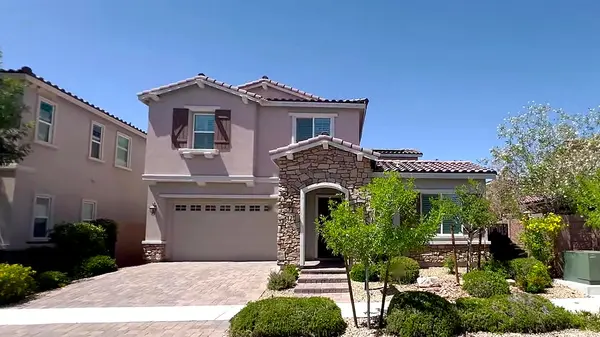
- Featured photo: Andrew Guiant, still from my own home tour video (Calico Ridge, Henderson): https://www.youtube.com/watch?v=g3vVhmyZ0bU
- All checked November 17, 2026.
Andrew Guiant, REALTOR® | Simply Vegas | NV Lic. S.0183462 | 702-496-8216 | andrewsellsvegas.com
Categories
- All Blogs (84)
- Aries (1)
- Buyer Tips (72)
- Communities (1)
- Community Guides (11)
- Golf Communities (4)
- Henderson (19)
- Henderson Events (1)
- High-Rise Condos (8)
- Las Vegas Communities (25)
- Las Vegas Events (1)
- Living in Las Vegas (13)
- Model Home Tours (3)
- Moving to Las Vegas (3)
- New Construction (8)
- Relocation (6)
- Seller Tips (16)
- Southwest Las Vegas (1)
- Things to Do (2)
Recent Posts




GET MORE INFORMATION