
Buying New Construction in San Marcos or Escondido: Mello-Roos, Supplemental Taxes and Your Real Monthly Budget (2026)
Buying a new home in San Marcos or Escondido can come with a second tax on top of your regular property tax, and a first-year tax bill your lender never sees. That second tax is usually a Mello-Roos special tax from a Community Facilities District (CFD), and the first-year bill is the supplemental tax bill the County sends after you close. Both cities sit inland along the State Route 78 corridor in North County San Diego, and both have newer neighborhoods that were built with CFD financing. If you're shopping new construction, or a resale home in a newer community, the price on the sign isn't the number that matters. Your real monthly cost is. Here's how I'd look up every special tax on a parcel, read the notice the law requires, plan for the supplemental bill and make sure your lender's estimate matches reality.
Why this matters before you sign
- Mello-Roos is set parcel by parcel, not city by city. Two homes at the same price, a few streets apart, can have very different tax bills.
- New construction is the most likely place to find it. California's required notice for a new subdivision says the tax is imposed "because it is a new development."
- Your first tax bills can be misleading on a new build. The County reassesses the home when construction is completed and again when you buy, and the catch-up comes as supplemental bills.
I'm Andrew Guiant, a REALTOR® with Rise Realty, licensed in California. I'm not here to talk you out of new construction or into it. I just want you to see the whole number before you commit.
By Andrew Guiant, REALTOR® | CA DRE #02448049 | Rise Realty | Updated November 17, 2026
Looking at a new build in San Marcos or Escondido? Call or text 702-496-8216 or email andrew@andrewsellsvegas.com.
Three Lines on Your Tax Bill: Property Tax, Mello-Roos and HOA Dues
| Item | What it is | How it's set | Where you'll see it |
|---|---|---|---|
| Ad valorem property tax | The Prop 13 base of 1% of assessed value, plus voter-approved bonds for the parcel's tax rate area | A percentage of assessed value | Your County property tax bill |
| Mello-Roos (CFD) special tax | A special tax levied by a city, school district or other agency inside a Community Facilities District | A formula for that district, usually not a percentage of your price | The "Fixed Charge" section of the same County tax bill |
| HOA dues | Dues to a private homeowners association for common areas and services | The HOA's budget | A separate bill from the HOA, not the County |
The San Diego County Treasurer-Tax Collector explains that Proposition 13 limits the tax rate to 1% of assessed value, plus voter-approved bonds and assessments, and that property is reassessed when it changes owners or undergoes new construction.
A home can have an HOA, a CFD, both or neither. My San Diego HOA guide covers the HOA side.
Which CFDs Show Up in San Marcos and Escondido?
The County Auditor and Controller publishes a list of Active Mello-Roos Districts for FY 2026-2027, with a contact number for each one. Here's what it shows for these two cities and their school districts.
| Agency on the County list | What's listed | Contact listed |
|---|---|---|
| City of San Marcos | 92 CFD and improvement-area lines | CFD Administration, (760) 744-1050 x 4506 |
| San Marcos Unified School District | 15 CFD lines | KeyAnalytics, (877) 575-0265 |
| City of Escondido | 4 CFDs: Hidden Trails CFD 2000-01, Eureka Springs CFD 2006-01, CFD 2020-2 The Villages, CFD 2022-1 Eclipse-Mtn House | Special District Financing Authority, (877) 575-0265 |
| Escondido Union School District | CFD No. 2019-1 | KeyAnalytics, (877) 575-0265 |
The number of lines doesn't tell you what any one parcel pays. Many San Marcos districts are split into improvement areas, and other agencies can levy CFDs too, so the parcel's own bill is the real answer.
San Marcos: what the City says about its CFDs
The City of San Marcos lists ten CFDs on its Mello-Roos page, including CFD 88-1 (Paloma/Santa Fe Hills), CFD 91-01 (Twin Oaks Valley Ranch), CFD 98-02 (Lighting and Landscaping), CFD 99-01 (San Elijo Hills) and CFD 2002-01 (University Commons). The City says it leans on them because it receives about $7 of every $100 in property taxes paid, one of the lowest shares in the county, and because voters approved Proposition R in 1988, requiring adequate infrastructure and services for new development.
A few things from the City's own FAQ that I'd want every buyer to know:
- Every CFD has a maximum special tax. The amount billed in a year can be lower.
- Escalators depend on the type of CFD. The City says most facilities CFDs don't increase annually, while services CFDs may increase up to 2% or by CPI each year.
- Some never end. The City says services CFDs (lighting, landscaping, police, fire and similar) have no expiration date. Facilities CFDs typically end once the bonds are paid off, although the authorized tax period can run longer.
- "Future annexation area" matters. If a recorded document says a property is in a future annexation area of a CFD, the City says it may be added to that CFD if it's developed or redeveloped.
Escondido: four city CFDs, each tied to a development
The City of Escondido describes a CFD as a special tax levied every year on the property tax bill to fund improvements for new homes or the ongoing cost of serving new development. Its page describes each district:
- Eclipse and Mountain House, CFD 2022-1: formed March 2, 2022, at the southwest corner of Brotherton Road and South Centre City Parkway.
- The Villages, CFD 2020-2: formed May 13, 2020, on the former Escondido Country Club property east of North Nutmeg Street and north of West El Norte Parkway.
- Eureka Ranch, CFD 2006-01: formed in September 2006 for street, storm drain, sewer and utility undergrounding work. The City says the tax can be levied no later than fiscal year 2046/47.
- Hidden Trails, CFD 2000-01: formed in September 2000 for street, water and sewer facilities along Hidden Trails Road and nearby streets. The City says the tax can be levied no later than fiscal year 2034/2035.
Those two end dates show why I don't guess at how long a CFD lasts. For the newer districts, the City posts the formation resolutions. Read them, or the special tax notice, for the maximum tax, the escalator and the last tax year.
How to Look Up a Parcel's Mello-Roos Before You Write an Offer
This is the part I do on every home a buyer is serious about. The San Diego County Assessor lays out the same basic steps.
- Get the Assessor's Parcel Number (APN) from the listing or the tax bill.
- Pull the current tax bill. The Treasurer-Tax Collector lets you search secured and supplemental bills by parcel number. Look at the fixed charges. The City of San Marcos says to look for line items that include "CFD" in the "Fixed Charge Assmts" section.
- Run the County's Fixed Charge Special Assessments lookup. The Assessor says this shows all the Mello-Roos and special assessments on the parcel for the fiscal year, each with a phone number.
- Match each CFD to the County's active district list. That gives you the administrator's name and number. The County's list says to call that number for payoff amounts, the length of the CFD and general questions.
- Ask the administrator, or the City, for the maximum tax and escalator. The Assessor says this is where you'll find the bond's maturity and maximum increases, and the City of San Marcos notes the bill may not show the maximum.
- Check the preliminary title report for a future annexation area.
One caution on a brand-new home: the current bill may still reflect land or a partly built home. On new construction, I lean on the special tax notice and the CFD administrator more than last year's bill.
The Mello-Roos Notice: What California Requires
California law spells out two versions of the "Notice of Special Tax."
Buying from a builder: Government Code §53341.5
If a lot or unit in a subdivision is subject to a Mello-Roos special tax, the law says the subdivider can't let you sign a purchase contract until you've been given, and have signed, a written Notice of Special Tax. The form tells you:
- that the tax is in addition to regular property taxes and other charges on the parcel, and that it's imposed "because it is a new development"
- the maximum special tax for facilities for the stated tax year, the percentage it can increase each year and the last tax year it can be levied
- any separate maximum special tax for ongoing services, how it can increase and how long it can last, which the form says may be "forever, as applicable"
- the facilities and services it pays for
The statute gives you three days after delivery in person, or five days after it's mailed, to terminate the agreement by written notice. In a new subdivision, the builder usually also has to give you the Department of Real Estate's Public Report before you sign a purchase contract, and the DRE says it covers matters affecting title, including taxes and assessments.
Buying a resale: Government Code §53340.2 and Civil Code §1102.6b
On a resale, Civil Code §1102.6b requires the seller to make a good faith effort to get the special tax notice from each agency that levies a Mello-Roos tax on the property and deliver it to you. Government Code §53340.2 requires the agency to provide that notice within five working days of a request, for a fee of up to $15. If the notice comes from a private disclosure company instead, the law says it must show the agency's name, the current year's tax, the maximum tax, the maximum yearly increase percentage, the date the tax ends and a contact number.
When I review a notice with a buyer, I'm reading four numbers: this year's tax, the maximum tax, the yearly increase and the end year. Then I check them against the parcel lookup.
Supplemental Tax Bills After You Buy
This is the bill that surprises people most.
- What it is. The Treasurer-Tax Collector says the County must reassess a property whenever it's sold or new construction is completed, and then sends a supplemental tax bill for the change in value from the date you closed escrow, or the new construction was reported, through June 30.
- How it's figured. New value minus old value, prorated by the months left in the fiscal year, with the 1% rate applied. The County Auditor says the difference is multiplied by "the rate applicable to the date of the event," so the real bill can differ from a 1%-only estimate.
- Two bills are possible. If the change in ownership happens, or new construction is completed, between January 1 and May 31, the Auditor says there will be two supplemental assessments.
- Your lender won't pay it. The Treasurer-Tax Collector says supplemental bills are separate from the annual bill and are not sent to a lender. The owner has to pay them on time.
- You can appeal. The Assessor says an appeal of a supplemental assessment must be filed within 60 days of the bill's mailing date.
Example: why a new build's first bills look low
Using example inputs only (not a real parcel): say the value on the roll before your purchase was $200,000 (for example, land or a partly finished home), you close at $900,000 and there are 6 months left in the fiscal year.
- $900,000 - $200,000 = $700,000 difference
- $700,000 x 6/12 = $350,000
- $350,000 x 1% = about $3,500
That's a rough 1%-only illustration of how the County catches the tax up to your price. A real bill also depends on the parcel's rate, the dates and how the Assessor valued the home when construction was completed. The Assessor says unfinished construction can be assessed on the January 1 lien date, but a supplemental bill isn't generated until the new construction is completed. Ask your escrow officer or the County for an estimate on the actual home, and set that money aside.
The Builder's Tax Estimate vs. Your Real First-Year Bill
Builders often show an estimated tax rate in their sales materials. It's a starting point. Here's how I'd check it:
- Ask what the estimate includes. Is it the 1% base plus the voter-approved bonds for that tax rate area? Does it include every CFD, both facilities and services, and any other fixed charges?
- Ask whether the CFD number is the maximum or this year's levy.
- Match it to the Notice of Special Tax and the DRE Public Report. The numbers should line up. If they don't, ask why before you sign.
- Plan for the supplemental bills. Your first annual bill may be based on an earlier value, so budget for the catch-up bills on top of your monthly escrow payment.
- Expect the bill to move. The Auditor says special assessments can increase or decrease from year to year.
And please don't go to the sales office by yourself. Let me meet you there, so someone on your side is reading the tax notice, the contract and the builder's estimates.
How Lenders Count Mello-Roos in Your Debt-to-Income Ratio
It changes how much house you qualify for.
- It's part of your housing payment. Fannie Mae's Selling Guide (B3-6-03) defines the monthly housing expense as principal and interest, insurance, real estate taxes, ground rent, special assessments, any HOA dues and any subordinate financing payments.
- The lender has to estimate taxes on the finished home. For purchase and construction-related loans, Fannie Mae says the lender must use a reasonable estimate of real estate taxes based on the value of the land and all improvements. It says the same applies where a sale typically triggers reassessment, which is how California works.
- DTI limits are real. Fannie Mae's guide (B3-6-02) sets a maximum DTI of 50% for loans underwritten through its Desktop Underwriter system, and 36% for manually underwritten loans, which can go up to 45% if the borrower meets Fannie Mae's credit score and reserve requirements. Other loan types have their own rules.
So give your lender the CFD amounts early, and ask to see exactly which tax and special assessment figures they used. If a Mello-Roos line is missing, your approval and your real payment won't match.
What October 2026 Prices Look Like by ZIP
These figures come from North San Diego County REALTORS® (NSDCAR) Local Market Updates for October 2026 (current as of November 4, 2026; data from CRMLS; report by ShowingTime Plus). NSDCAR doesn't separate new construction from resale here, so treat these as the overall market, not new-build prices.
Detached homes, 12 months through October 2026
| ZIP | Median sales price | Closed sales | Median days on market | % of original list price received |
|---|---|---|---|---|
| 92069 San Marcos | $987,500 | 202 | 34 | 97.9% |
| 92078 San Marcos | $1,250,000 | 306 | 30 | 97.6% |
| 92025 Escondido | $987,000 | 180 | 33 | 96.9% |
| 92026 Escondido | $862,500 | 423 | 41 | 97.5% |
| 92027 Escondido | $850,000 | 308 | 27 | 98.6% |
| 92029 Escondido | $1,249,000 | 193 | 38 | 97.5% |
Attached-home (condo and townhome) 12-month medians ran from $374,000 in 92027 to $726,750 in 92078.
NSDCAR notes its prices don't account for sale concessions or down payment assistance, which matters on a new build if the builder is offering incentives.
Detached supply in October 2026 ran from 2.0 months (92025) to 2.8 months (92069). For the bigger picture, see my North County San Diego Housing Market October 2026 update.
Build Your Real Monthly Number
Here's the 1% base on each detached median. It's only the base, and it assumes your assessed value equals your price.
| ZIP | Detached 12-mo. median | 1% base per year | Per month |
|---|---|---|---|
| 92069 San Marcos | $987,500 | $9,875 | about $823 |
| 92078 San Marcos | $1,250,000 | $12,500 | about $1,042 |
| 92025 Escondido | $987,000 | $9,870 | about $823 |
| 92026 Escondido | $862,500 | $8,625 | about $719 |
| 92027 Escondido | $850,000 | $8,500 | about $708 |
| 92029 Escondido | $1,249,000 | $12,490 | about $1,041 |
Then add principal and interest from your Loan Estimate, the voter-approved bond rate for the parcel's tax rate area, every CFD from the notice and parcel lookup, any other fixed charges, HOA dues, an insurance quote and a separate reserve for supplemental bills. My Carlsbad vs. San Marcos guide has the full line-by-line worksheet.
If it's your primary residence, file the Homeowners' Exemption. The County Assessor says it saves about $70 a year. My San Diego property taxes guide has the full walkthrough.
My New-Build Tax Checklist
- Get pre-approved with the CFD amounts included.
- Read the Notice of Special Tax and DRE Public Report before you sign.
- Run the parcel lookup and call each CFD administrator.
- Reserve cash for supplemental bills, and expect two if you close between January 1 and May 31.
- Inspect, even on new construction. My San Diego home inspections guide covers what to order and when.
- Budget the close. See my San Diego closing costs guide, and my San Diego offer guide for the contract side.
A Few Honest Caveats
- No Mello-Roos amounts or city-wide tax rates on purpose. Both depend on the parcel and its tax rate area.
- ZIP isn't city. ZIP lines and city limits don't always match, so confirm the city and tax rate area on the tax bill.
- Numbers change. These are October 2026 reports, current as of November 4, 2026, and FY 2026-2027 CFD lists.
FAQ: Mello-Roos and New Construction in San Marcos and Escondido
Do all new homes in San Marcos and Escondido have Mello-Roos?
Not necessarily. It depends on the parcel, so check the special tax notice and the tax bill before you sign.
Does Mello-Roos go up every year?
It depends on the district. The City of San Marcos says most of its facilities CFDs don't increase annually, while services CFDs may increase up to 2% or by CPI. The Notice of Special Tax shows the maximum yearly increase for the specific CFD.
Can I back out if I didn't know about the Mello-Roos?
On a new subdivision, Government Code §53341.5 gives you three days after in-person delivery of the notice, or five days after it's mailed, to terminate by written notice. Talk to your agent and attorney about your specific contract.
Will my lender pay the supplemental tax bill?
No. The San Diego County Treasurer-Tax Collector says supplemental bills are not sent to lenders, and the owner is responsible for paying them.
Buying New Construction in Las Vegas Too?
Comparing new builds in Southern Nevada? Read my How to Buy New Construction in Henderson and Las Vegas guide and New Construction Homes in Henderson NV guide. Still deciding on timing? See is 2026 a good time to buy in San Diego and my San Diego first-time buyer programs guide.
Let's Run the Numbers on a Real Home
Send me the new build or newer resale you're looking at in San Marcos or Escondido. I'll pull the tax bill, every CFD on the parcel and recent matched sales, and we'll build your real monthly number before you sign anything.
Call or text 702-496-8216 or email andrew@andrewsellsvegas.com. It's my cell, I'll answer.
New Construction Videos
These are from my Las Vegas and Henderson new-construction videos, but the buyer lessons apply anywhere. Click any video to watch it on YouTube.
 ▶ My new build had 80 problems | Why inspections matter, even on new homes |
 ▶ Builders are slashing prices | What it means for buyers |
 ▶ KB Home 1765 model | New construction tour | Henderson |
 ▶ Cadence homes being built | New construction going up |
More videos: see them all on my YouTube channel.
Sources
- NSDCAR Local Market Updates, October 2026 (current as of Nov. 4, 2026; CRMLS data; ShowingTime Plus): 92069 San Marcos | 92078 San Marcos | 92025 Escondido | 92026 Escondido | 92027 Escondido | 92029 Escondido | Marketwatch Report, October 2026
- County of San Diego Auditor and Controller, Active Mello-Roos Districts (CFD), FY 2026-2027 and Property Tax FAQ
- San Diego County Treasurer-Tax Collector, Secured Property Taxes and Supplemental Taxes
- San Diego County Assessor, Mello-Roos | Real Property Assessment (new construction and supplemental assessments) | Homeowners' Exemption
- County of San Diego, Fixed Charge Special Assessments lookup
- City of San Marcos, CFD (Mello-Roos)
- City of Escondido, Community Facilities Districts
- California Government Code §53340.2 and §53341.5; California Civil Code §1102.6b
- California Department of Real Estate, Residential Subdivision Buyer's Guide and Public Reports
- Fannie Mae Selling Guide, B3-6-03, Monthly Housing Expense for the Subject Property and B3-6-02, Debt-to-Income Ratios
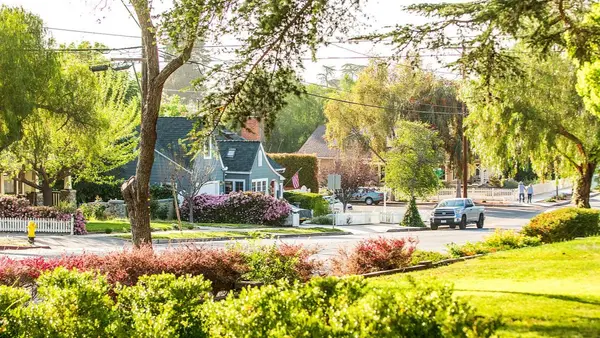
- Featured photo: "Historic Downtown Escondido Grand Avenue July 2025, Facing Northeast" by CaliforniaUrbanist, Wikimedia Commons, licensed CC BY-SA 4.0. Cropped and color-adjusted.
- All checked November 17, 2026.
Looking for California real estate? This guide is for North County San Diego buyers. Andrew Guiant is licensed in California and works with Rise Realty. Call or text 702-496-8216 or email andrew@andrewsellsvegas.com.
Prefer a Las Vegas comparison? Read How to Buy New Construction in Henderson & Las Vegas: Step by Step (2026).
Andrew Guiant, REALTOR® | CA DRE #02448049 | Rise Realty, Broker DRE #01957687, 1902 Wright Place #200, Carlsbad, CA 92008.
Also licensed in Nevada, S.0183462, with Simply Vegas.
General information only, not legal, tax, insurance, lending or financial advice, and not a prediction of future prices or mortgage rates. Market statistics, special taxes, tax rates and lending guidelines change. Confirm current figures, comps, tax bills, special tax notices, insurance quotes and contract terms with your lender, insurance agent, escrow or title company and advisors. Information deemed reliable but not guaranteed.
Categories
- All Blogs (84)
- Aries (1)
- Buyer Tips (72)
- Communities (1)
- Community Guides (11)
- Golf Communities (4)
- Henderson (19)
- Henderson Events (1)
- High-Rise Condos (8)
- Las Vegas Communities (25)
- Las Vegas Events (1)
- Living in Las Vegas (13)
- Model Home Tours (3)
- Moving to Las Vegas (3)
- New Construction (8)
- Relocation (6)
- Seller Tips (16)
- Southwest Las Vegas (1)
- Things to Do (2)
Recent Posts

GET MORE INFORMATION