

Unpermitted Additions and Garage Conversions: How to Check a Las Vegas Home's Permit History Before You Buy (2026)
Buying a Las Vegas home with a converted garage, an enclosed patio, a casita out back or a "just remodeled" kitchen? Before you fall for it, take five minutes to look up the permit history. Building permits are public records here. The City of Las Vegas and Clark County both let you search permits by address or parcel number online, and both have a records office for anything older or harder to find. Nevada's seller disclosure form also asks the seller, point blank, whether any work was done without required permits. Checking during your due diligence window tells you whether the extra bedroom, the bigger patio or the new electrical panel was inspected, while you still have time to ask questions or negotiate. This guide covers why permits matter, how to look them up in the City of Las Vegas and unincorporated Clark County, how to compare them with the Assessor's record and the seller's disclosure, and what to do if you find unpermitted work.
The short version
- Permits are public records. City of Las Vegas permits can be searched at LasVegasNevada.gov/CheckStatus. Unincorporated Clark County permits (Spring Valley, Enterprise, Paradise, Summerlin South and other County areas) can be searched on the County's Citizen Access portal by site address or parcel number.
- Know who issued the permit. A Las Vegas mailing address doesn't always mean the City of Las Vegas. The building department that matters is the one with jurisdiction over that parcel.
- Read the seller's disclosure. Item 1(c) on Nevada's Seller's Real Property Disclosure Form asks about "any construction, modification, alterations, or repairs made without required state, city or county building permits."
- Compare the records. If the house has a room, casita or conversion that doesn't show up in the permit history or the Assessor's record, ask about it.
- Garage conversions get extra attention. The City's own homeowner guide says converting a garage into living space needs a permit, and points to fire deaths in unpermitted garage conversions that lacked proper ventilation and emergency exits.
- Do it inside due diligence. Unpermitted doesn't always mean walk away. Get the facts, price the fix and negotiate or cancel before your Due Diligence Deadline.
I'm Andrew Guiant, a REALTOR® with Simply Vegas. I tour a lot of remodeled homes, and the finishes are the easy part to see. What's behind the walls, and whether anybody inspected it, is the part I want you to check.
By Andrew Guiant, REALTOR®, Nevada License S.0183462, Simply Vegas | Updated November 28, 2026
Found a home with an addition or a converted garage? Send me the address and I'll help you pull the permit history. Call or text 702-496-8216.
Why Permit History Matters When You Buy in Las Vegas
A building permit is the City's or County's record that a project was approved and inspected. The City of Las Vegas Building & Safety homeowner guide, When Do I Need a Permit?, puts it simply: permits "provide a permanent record of the work performed and inspections conducted on the home for insurance needs, resale value, and general knowledge of the history of the home."
That same guide is blunt about the downside. It says work done without permits and discovered later "can require an engineering evaluation and report, possible destructive testing, removal of wall coverings, and replacement plumbing, electrical or other various elements of the un-permitted construction at great cost and irritation to the homeowner or subsequent homeowner." Notice that last part: subsequent homeowner. If you buy it, the problem can become yours.
None of that means every remodel is a problem. Plenty of upgrades here were permitted and finaled years ago. The point is to know which one you're buying.
What usually needs a permit (City of Las Vegas guide)
The City's guide says it isn't all-inclusive, and you should always confirm with the building department. But its list is a great checklist for walking a resale home. A permit is generally required to:
- Add a room or finish an attic, garage or basement into more living space.
- Build, demolish or move a carport, garage or shed of 200 square feet or larger.
- Build a patio or enclose an existing patio.
- Move, remove or add walls, or cut in a new window or door opening or widen one.
- Build a block wall more than 30 inches high, or an ornamental iron or wood fence over 7 feet high.
- Build a retaining wall more than 30 inches high or a deck more than 30 inches above grade.
- Re-roof when all the old roofing is removed or new sheathing goes on, and when tile roofing goes in.
- Install or alter permanent wiring, add outlets or fixtures, or change, upgrade or relocate the main electrical panel.
- Install a solar (photovoltaic) system.
- Install or replace a water heater or water softener, or alter piping inside a wall, ceiling or under a floor.
- Install gas piping between the meter and an appliance, like a gas line for a BBQ, fire pit or pool heater.
- Install or change any part of a heating or cooling system.
The guide also lists work that generally doesn't need a permit, like painting, flooring, cabinets, countertops and like-for-like fixture swaps. So new cabinets, counters and paint may not have needed a permit at all. A kitchen where walls moved, the electrical changed or a gas line was added is a different story.
If the home has solar, my Las Vegas solar guide covers the paperwork to ask for. If it has a water softener, my hard water guide covers those questions.
Step 1: Figure Out Which Building Department Has the Records
This is the step people skip. Las Vegas Valley addresses can sit in the City of Las Vegas, unincorporated Clark County, Henderson or North Las Vegas, and each one keeps its own building permits. A "Las Vegas, NV" mailing address in Spring Valley or Enterprise, for example, is a County address for permits.
My City of Las Vegas vs. unincorporated Clark County guide explains how to confirm the jurisdiction for any address. Once you know it, you know where to search.
Step 2: Search the Permit Records Online
City of Las Vegas: Check Status
The City's homeowner guide says that to check for permits on an address or parcel, and to see the status of plan reviews and inspections, go to LasVegasNevada.gov/CheckStatus. The City's Managing Projects During Reviews guide says you can search Check Status by address, parcel, project name, project number or key number, then open each project to see details like review comments, inspection comments, the permit card and, when it applies, the Certificate of Occupancy or Certificate of Completion.
What to look for:
- Is there a permit for the work you can see? If the listing says "converted garage" or "added fourth bedroom," look for a permit that matches.
- Was it finaled? A permit that was issued but never passed final inspection is worth a question.
- Does the scope match? A permit for a patio cover doesn't cover enclosing that patio later.
For older or missing records, the City's guide points to LasVegasNevada.gov/RecordsRequest. Building & Safety is at City Hall, 495 S. Main Street, 1st Floor, and the guide lists staff availability Monday through Thursday, 7:00 a.m. to 4:30 p.m., at 702-229-6251.
Unincorporated Clark County: Citizen Access
For County addresses, the Clark County Department of Building & Fire Prevention's Citizen Access portal lets you search permits by site address, contractor license information, parcel number or record information. The search page notes that County permit numbers start with letters, in a format like BD##-#####-#. The County also runs a document image search (docimgsrch.clarkcountynv.gov) for permit records that are available online. The County's Citizen Access user guide notes that search dates default to the last 5 years, so widen the date range when you're looking for older permits.
Two things to know about County records:
- Older files can be thin. The County's records FAQ says building permits are available from the 1970s to the present, but "documents may be limited prior to the mid-1990s."
- You can request records. Fill out the Public Records Request Form and email it to dsrecords@clarkcountynv.gov, or visit the Records counter at 4701 W. Russell Road, Las Vegas, NV 89118, Monday through Thursday, 7:30 a.m. to 5:30 p.m. The Records Office phone is 702-455-3029. Copies of stamped plans can require the design professional's written permission.
The County has announced a move to a new electronic plan review system called ePermitHub, so the online tools may change. If a search doesn't work, call the records office.
Henderson and North Las Vegas
Henderson has its own online permit search, covered in my Henderson casita and ADU guide. For North Las Vegas, check with that city's building department.
Step 3: Compare the Permits With the Assessor's Record
The Clark County Assessor keeps a building record and sketch for each parcel. Its building sketch FAQ says the sketch is used to calculate the square footage of the residence for taxable value, that building sketches are public records, and that they help REALTORS® and appraisers confirm a home's size.
Here's how to use it:
- Look at the square footage and features. The Assessor's parcel record lists details like living area, garage square footage and, on many records, a field for additions or conversions. The Assessor's residential data extract also includes a "conversion or addition square footage" field.
- Tract homes may show a master sketch. The FAQ says subdivision tract homes are often drawn as a master sketch with all available options shown, so look at the property attribute information to see which options are on record.
- The Assessor can be out of date. The FAQ says features may have been added or deleted that the Assessor isn't aware of. A mismatch isn't proof of a problem. It's a reason to ask.
So if the Assessor shows a two-car garage and 1,800 square feet, and the listing shows a converted garage and 2,200 square feet, that's a question for the seller and the permit records.
Step 4: Read the Seller's Disclosure Closely
Most resale sellers in Nevada have to give you the Seller's Real Property Disclosure Form (Form 547, Rev. 6/1/2023) at least 10 days before the property is conveyed (NRS 113.130). A few items speak directly to permits:
- Item 1(c): "Any construction, modification, alterations, or repairs made without required state, city or county building permits?"
- Item 2(f): "Any encroachments, easements, zoning violations or nonconforming uses?"
- Item 9(f), for HOA homes: "Any construction, modification, alterations, or repairs made without required approval from the appropriate Common Interest Community board or committee?"
Keep in mind what the law says about the form. Under NRS 113.140, a seller doesn't have to disclose a defect they aren't aware of, the completed form isn't a warranty, and buyers still have a duty to use reasonable care to protect themselves. A "No" on item 1(c) is helpful, but it doesn't replace your own permit search. That's especially true if the seller bought the home with the work already done.
If you're buying in an HOA, the architectural approval question matters too. Your Las Vegas HOA guide explains the resale package and how to read the CC&Rs.
Garage Conversions, Patio Enclosures and Casitas: What to Check
These are the projects I see most often on Las Vegas resale homes, and they're the ones most worth a permit search.
Garage conversions
The City's guide lists converting a garage into habitable space as work that needs a permit, and it specifically mentions "documented cases of occupant deaths in fires involving un-permitted projects such as garage conversions because codes were not complied with and required proper ventilation and emergency egress were not provided." That's not meant to scare you off a house. It's why I'd always want to see the permit, or have a qualified professional look at the space, before you use a converted garage as a bedroom.
There's a zoning side too. In unincorporated Clark County, the Title 30 development code's parking table calls for 2 parking spaces per single-family home, so a garage conversion can raise a parking question as well as a building code question. In the City of Las Vegas, the homeowner guide points zoning questions to the Planning Department at 702-229-6301. Ask the right planning office before your due diligence deadline.
In person, I look for a proper window or door for emergency escape, how the room is heated and cooled, whether the floor is still the old garage slab, and where you'd park now.
Enclosed patios and sunrooms
The City's guide says building a patio or enclosing an existing patio needs a permit. An enclosed patio that's being marketed as living space should have a permit that matches. Look at how it ties into the roof, whether it has its own heating and cooling, and whether electrical was added.
Casitas, guest houses and big sheds
Detached structures of 200 square feet or more need a permit under the City's guide, and so does electrical, plumbing or mechanical work. A casita with a bathroom and kitchenette has a lot of permit-worthy work in it, so match it to a permit.
Outdoor kitchens and fire pits
Gas lines to a BBQ, fire pit or pool heater are on the City's permit list, so ask whether that gas work was permitted. My Henderson pool home guide covers pool inspections.
What Unpermitted Work Can Mean for Your Appraisal, Loan and Insurance
The appraisal
Fannie Mae's Selling Guide (B4-1.3-05) says that if the appraiser identifies an addition that doesn't have the required permit, the appraiser must comment on the quality and appearance of the work and its impact, if any, on the market value of the property. In plain English: unpermitted square footage can be valued differently than permitted space, and your appraiser has to say something about it. FHA, VA and other loan programs have their own rules, so ask your lender early if you know there's unpermitted work. My Las Vegas appraisal guide explains what happens if the appraisal comes in low.
Insurance
The City's guide warns that if you improve or add on without permits and it fails, "your insurance company may not help you with the liability." Before your due diligence deadline, tell your insurance agent about any addition or conversion and ask how it affects your policy. My home insurance guide covers the rest of what to ask before you close.
Your home inspection
A home inspection reports on the condition of what the inspector can see. Permit history is a records question, so pull the records too. If the inspector flags something in an addition or conversion, like wiring, venting or water heater installation, that's a good reason to bring in a licensed contractor before your deadline. Here's my Las Vegas home inspection guide.
You Found Unpermitted Work. Now What?
First, don't panic. Then get facts while your Due Diligence Period is still open.
Use your Due Diligence Period
Under Section 8 of the Las Vegas REALTORS® Residential Purchase Agreement (Rev. 10/25), your due diligence can include whether the property "is properly zoned" and any other concerns you have about it, and you can inspect through licensed and bonded contractors or other qualified professionals. By the Due Diligence Deadline, you can cancel in writing and get your earnest money back, or resolve your objections with the seller in writing. If you do neither, you're deemed to have waived the due diligence condition. My due diligence guide explains the whole window.
Your options
- Ask the seller what was done and by whom. Contractor invoices, a contractor's license number and any plans help a lot. You can check a contractor's license with the Nevada State Contractors Board; the City's guide lists its number as 702-486-1100.
- Get a licensed contractor's opinion. Ask what it would take to permit the work as it stands, or to bring it up to code, and what that might cost.
- Ask the building department how they'd handle it. Clark County's Building Administrative Code (County reprint, printed October 2022) says work done without a permit gets a special investigation before a permit can be issued, and that the work must meet the technical codes for a new facility unless the Building Official approves otherwise. It also lists a work-without-a-permit fee on top of the permit fee, plus an investigation fee.
- Negotiate. Depending on what you learn, that could be the seller permitting the work before closing, a credit, a price change or, in some cases, removing the work.
- Walk away inside the window if the answers don't work for you.
A note on voluntary disclosure in Clark County
The County's posted Building Administrative Code has a voluntary disclosure section that's useful for buyers to know about. It says the Building Official may reduce certain fees for voluntary disclosure of work without a permit. For voluntary disclosure within 90 days of receiving ownership, the work-without-a-permit fee may be waived, and the reprint says R-3 occupancies (which generally include single-family homes) and their accessory structures are exempt from that 90-day limit. For unpermitted work done by a previous owner, it says the 90-day clock doesn't start until the current owner knows, or with reasonable diligence should have known, about the unpermitted work. Fee rules change, so confirm with the County Building Department. The City of Las Vegas has its own process, and its guide notes you may be subject to investigation fees for work started without required permits.
What "owner-builder" means
Sometimes a seller says, "I did it myself." NRS 624.031(5) exempts an owner building or improving a home for their own occupancy, not for sale or lease, from Nevada's contractor licensing law. That's an exemption from needing a contractor's license, not from building permits. The City's guide says do-it-yourselfers still need permits when the work calls for one.
Selling? Check Your Own Permits Before You List
Selling a home with an addition, a converted garage or an enclosed patio? Look up your own permit history before you list. It helps you answer item 1(c) accurately and lets you fix gaps on your timeline instead of a buyer's. My guide to preparing your house to sell has the rest of the pre-listing checklist.
Permit History Checklist for Las Vegas Buyers
- Confirm the jurisdiction: City of Las Vegas, unincorporated Clark County, Henderson or North Las Vegas.
- Search the permits: LasVegasNevada.gov/CheckStatus for the City, Citizen Access for the County.
- Match permits to what you see: additions, garage conversions, patio enclosures, casitas, solar, panel upgrades, gas lines, water heaters and HVAC.
- Check for finals: issued isn't the same as finaled.
- Compare with the Assessor's record: square footage, garage size and any addition or conversion field.
- Read Form 547: items 1(c), 2(f) and, for HOA homes, 9(f).
- Ask for paperwork: permits, invoices, contractor license numbers and HOA approvals.
- Call your lender and insurance agent if there's unpermitted space.
- Bring in a licensed contractor for anything that worries you.
- Negotiate or cancel in writing before your Due Diligence Deadline.
Frequently Asked Questions
How do I check permits on a house in Las Vegas?
First confirm whether the address is in the City of Las Vegas or unincorporated Clark County. For the City, search the address or parcel at LasVegasNevada.gov/CheckStatus. For the County, search by site address or parcel number on the Clark County Building & Fire Prevention Citizen Access portal. For older or missing records, file a records request with that building department.
Is it bad to buy a house with unpermitted work in Las Vegas?
Not automatically. It depends on what the work is, whether it was done safely and what it would take to permit or fix it. Use your Due Diligence Period to find out.
Does a garage conversion need a permit in Las Vegas?
Yes, according to the City of Las Vegas homeowner guide, which lists converting a garage into habitable space as work that requires a permit. In unincorporated Clark County, the Building Administrative Code requires a permit to alter a building or change its occupancy.
Does the seller have to tell me about unpermitted work?
Nevada's Seller's Real Property Disclosure Form asks whether the seller is aware of any construction, modification, alterations or repairs made without required permits (item 1(c)). Under NRS 113.140, a seller doesn't have to disclose a defect they aren't aware of, so do your own permit search too.
Watch: Remodels, Casitas and Garages I've Toured
Click any video to watch it on YouTube. The homes shown were for sale when I filmed them and aren't necessarily for sale now.
 ▶ Remodeled home: pass or fail? | Look past the finishes |
 ▶ Remodeled pool home | 3-car garage, built 1991 |
 ▶ No HOA with a casita | Outdoor kitchen and lounge |
 ▶ Detached casita | Gated, theater and gym |
More videos: see them all on my YouTube channel.
Buying Soon? Let's Check the Permits Together
When we find your home, I'll help you confirm the jurisdiction, pull the permit history, compare it with the Assessor's record and the seller's disclosure, and line up the right contractor questions early in your due diligence window. Moving from out of state? My out-of-state moving checklist has the rest of the to-do list, my how to make an offer guide covers how these terms show up from day one, and my resale vs. new construction guide compares the two if you'd rather skip a remodel altogether.
Call or text 702-496-8216. It's my cell, I'll answer.
Andrew Guiant, REALTOR® | Simply Vegas
📞 702-496-8216
✉️ andrew@andrewsellsvegas.com
🏠 Search homes: andrewsellsvegas.com
▶️ Home tours: YouTube @andrewsellsvegas
Permit rules, records procedures, fees and contact details come from the City of Las Vegas Building & Safety, the Clark County Department of Building & Fire Prevention, the Clark County Assessor, Clark County Title 30, the Nevada Real Estate Division, the Nevada Revised Statutes, the Las Vegas REALTORS® Residential Purchase Agreement (Rev. 10/25) and Fannie Mae as of November 28, 2026, and can change. Always confirm with the building department that has jurisdiction over the home, whether that's the City of Las Vegas, Clark County, the City of Henderson or the City of North Las Vegas. This post is general information, not legal, tax, insurance, engineering or construction advice, and it is not a guarantee that any work was or wasn't permitted, inspected or code compliant. Talk with your attorney, a licensed contractor, your lender and your insurance agent about your own situation. Information is deemed reliable but not guaranteed.
Sources
- City of Las Vegas Building & Safety, When Do I Need a Permit? A Homeowner's Guide: https://files.lasvegasnevada.gov/building-safety/When-Do-I-Need-A-Permit.pdf
- City of Las Vegas Building & Safety, Managing Projects During Reviews (Check Status): https://files.lasvegasnevada.gov/building-safety/Forms/General/Managing_Projects.pdf
- City of Las Vegas, Building Permits: https://www.lasvegasnevada.gov/Business/Planning-Zoning/Building-Safety/Building-Permits
- Clark County Building & Fire Prevention, Accela Citizen Access permit search: https://aca-prod.accela.com/clarkco/Cap/CapHome.aspx?module=Building
- Clark County Building & Fire Prevention, Public Records Request: https://www.clarkcountynv.gov/government/departments/building___fire_prevention/record/public-records-request
- Clark County Building & Fire Prevention, Records FAQ: https://www.clarkcountynv.gov/government/departments/building___fire_prevention/record/faq
- Clark County Building & Fire Prevention, Citizen Access Portal User Guide (search date default): https://www.clarkcountynv.gov/adobe/assets/urn:aaid:aem:bd8871d0-7072-41d5-9e18-5df24418a090/original/as/citizen-access-general-information.pdf
- Clark County Building & Fire Prevention, Citizen Access Portal: https://www.clarkcountynv.gov/government/departments/building___fire_prevention/citizen-access-portal
- Clark County, 2018 Building Administrative Code (reprint of Clark County Code Chapter 22.02, printed October 2022), Sections 22.02.165 and 22.02.360: https://www.clarkcountynv.gov/assets/documents/government/departments/building___fire_prevention/codes/administrative-code-2nd-proof-final-08-18-22-printed-10-2022.pdf
- Clark County Title 30 Unified Development Code (compiled version effective November 19, 2026), Table 30.04-2 Minimum Required Parking: https://www.clarkcountynv.gov/adobe/assets/urn:aaid:aem:21c4b813-cca7-4657-ae69-2c93db279da7/original/as/OFFTitle30.EFF.11.19.26.pdf
- Clark County Assessor, Building Sketch FAQ: https://maps.clarkcountynv.gov/assessor/webimages/buildingSketchFAQ.asp
- Nevada Real Estate Division, Seller's Real Property Disclosure Form (Form 547), Revised 6/1/2023: https://red.nv.gov/uploadedFiles/rednvgov/Content/Forms/547.pdf
- Nevada Revised Statutes Chapter 113 (NRS 113.130 and 113.140): https://www.leg.state.nv.us/nrs/nrs-113.html
- Nevada Revised Statutes Chapter 624 (NRS 624.031): https://www.leg.state.nv.us/nrs/nrs-624.html
- Greater Las Vegas Association of REALTORS® (Las Vegas REALTORS®), Residential Purchase Agreement, Rev. 10/25, Section 8 (blank form)
- Fannie Mae Selling Guide B4-1.3-05, Improvements Section of the Appraisal Report: https://selling-guide.fanniemae.com/sel/b4-1.3-05/improvements-section-appraisal-report
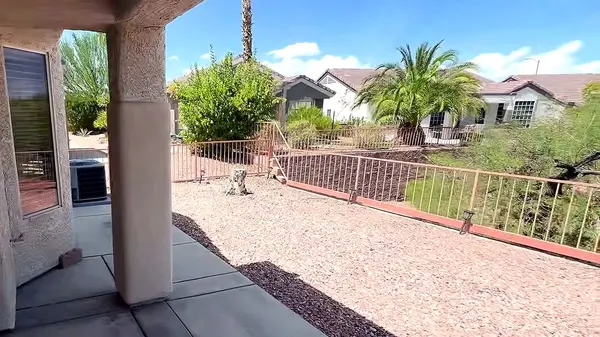
- Featured photo: Andrew Guiant, still from his own home tour video (https://www.youtube.com/watch?v=ISsLg38xWVY). Cropped, brightened and color-enhanced.
- All checked November 28, 2026.
Andrew Guiant, REALTOR® | Simply Vegas | NV Lic. S.0183462 | 702-496-8216 | andrewsellsvegas.com
Categories
- All Blogs (96)
- Aries (1)
- Buyer Tips (84)
- Communities (1)
- Community Guides (11)
- Golf Communities (4)
- Henderson (23)
- Henderson Events (1)
- High-Rise Condos (8)
- Las Vegas Communities (26)
- Las Vegas Events (1)
- Living in Las Vegas (18)
- Model Home Tours (3)
- Moving to Las Vegas (3)
- New Construction (8)
- Relocation (6)
- Seller Tips (16)
- Southwest Las Vegas (1)
- Things to Do (2)
Recent Posts




GET MORE INFORMATION